
Affordable Plumbing was great to deal with! Had a problem with a very niche gas line in my home. Derek came right out to look at it and determined it would take a specialty fireplace company to replace. Really appreciated his honesty, integrity and communication. I’ll absolutely use them for my next plumbing needs.

Cast Iron Pipe Replacement: Signs It's Time and What to Expect
Cast iron pipes were widely used in older homes because of their strength and long lifespan. However, even durable plumbing materials wear out over time. Years of exposure to water, waste, moisture, and minerals can cause cast iron pipes to corrode from the inside, leading to leaks, drainage problems, and reduced plumbing performance. Understanding when cast iron pipe replacement is needed can help homeowners avoid costly repairs and maintain a reliable plumbing system.
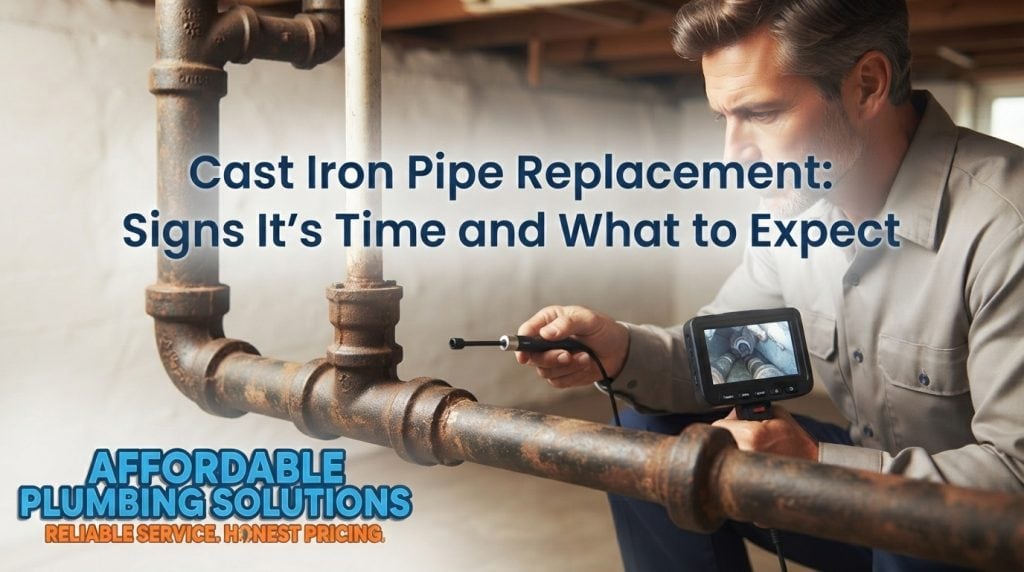
Many plumbing issues begin with small warning signs that are easy to overlook. Slow drains, recurring clogs, unpleasant sewer odors, rust-colored water, and water damage around the property may all indicate deteriorating cast iron pipes. Identifying these symptoms early allows homeowners to address pipe problems before they develop into major plumbing failures, sewage backups, or structural damage that requires extensive repairs.
What Are Cast Iron Pipes?
Cast iron pipes were widely used in residential and commercial plumbing systems throughout much of the twentieth century. These durable pipes were commonly installed for drain lines, sewer connections, and wastewater management because they could withstand heavy use and offered excellent strength.
Although cast iron sewer pipes have a long pipe lifespan compared to some older materials, they are not immune to deterioration. Continuous exposure to water, waste, minerals, and environmental conditions gradually weakens the interior and exterior surfaces. As corrosion develops, the pipes may become thinner, rougher, and more vulnerable to cracks and leaks.
Today, many property owners with aging home plumbing systems are considering old pipe replacement as a proactive solution. Modern materials often provide greater resistance to corrosion, improved performance, and reduced maintenance requirements. Replacing outdated plumbing infrastructure can help prevent future sewer line issues while supporting a more dependable home water supply.
Signs You Need Cast Iron Pipe Replacement
Recognizing the signs of pipe replacement early can help homeowners prevent major plumbing failures. While some symptoms may seem minor at first, they often indicate ongoing underground pipe damage or advanced pipe deterioration.
Discolored or Rusty Water
Changes in water appearance are often among the first warning signs of corroded pipes. If you notice brown water from tap fixtures, yellow water, or rusty water flowing from faucets, there may be corrosion occurring inside aging plumbing lines.
As pipe corrosion issues worsen, rust particles can mix with the water supply and affect water quality. While discoloration can occasionally result from municipal water system work, recurring strange water color should not be ignored. A professional plumbing inspection can determine whether the issue is linked to deteriorating cast iron plumbing pipes.
Persistent Foul Odors
A healthy plumbing system should safely contain wastewater and sewer gases. When cast iron sewer pipes begin to crack or separate, unpleasant odors may escape into the home.
A sewer gas smell near sinks, showers, or drains often signals hidden pipe damage. Homeowners frequently describe this issue as a foul odor from drains that persists despite cleaning efforts. Sewer gas exposure can create an uncomfortable living environment and may indicate significant sewer line issues that require immediate attention.
Slow Drains and Frequent Clogs
Drainage problems that repeatedly occur throughout the home can point to aging pipes rather than isolated blockages. As cast iron pipes deteriorate internally, rust and debris accumulate along the pipe walls.
This buildup reduces water flow and increases the likelihood of a drain blockage. If multiple fixtures drain slowly or experience recurring clogs, the underlying cause may involve damaged plumbing pipes. In many cases, ongoing plumbing repairs provide only temporary relief when extensive corrosion is present.
Mold Growth Near Walls or Floors
Unexpected mold growth can sometimes be traced back to hidden plumbing leaks. Small leaks from corroded pipes may release moisture behind walls, beneath flooring, or within crawl spaces.
Mold and moisture issues often develop in areas where water remains undetected for extended periods. Over time, mold growth can spread and affect indoor air quality. If unexplained mold appears near plumbing lines, water leak detection services may reveal concealed pipe leaks that require further evaluation.
Sewage Backups
One of the most serious signs of failing cast iron sewer pipes is recurring sewage backups. When wastewater cannot move efficiently through deteriorating sewer lines, it may reverse direction and enter sinks, tubs, or floor drains.
These incidents create sanitation concerns and can result in significant property damage. Broken sewer lines, severe corrosion, and internal obstructions are common causes of wastewater flow disruptions. Frequent backups often indicate that sewer line replacement may be more effective than repeated repairs.
Unexplained Green Patches in Your Yard
A healthy lawn is generally a positive sign, but unusually vibrant sections of grass can sometimes indicate underground plumbing problems. When wastewater escapes from leaking sewer lines, surrounding soil may receive additional nutrients and moisture.
As a result, green patches in lawn areas may appear noticeably different from the rest of the yard. This condition can signal underground pipe damage that should be investigated promptly. Tree root intrusion is another common factor that contributes to sewer line deterioration and hidden leaks beneath landscaped areas.
Cracks or Shifts in Your Home's Foundation
Plumbing failures do not always remain confined to the pipes themselves. Long-term leaks can gradually affect the soil beneath a property's foundation. When water continuously saturates surrounding ground, movement may occur beneath the structure.
Over time, foundation cracks, uneven floors, and other signs of home foundation damage may develop. Structural damage caused by persistent plumbing leaks can become costly to repair if the underlying pipe problems remain unresolved.
Visible Pipe Corrosion or Leaks
In homes where portions of the plumbing system are exposed, visual inspections can reveal important warning signs. Rust buildup, flaking surfaces, discoloration, and moisture accumulation often indicate advanced pipe corrosion. Visible cracked pipes or a leak in pipes should never be dismissed as a minor issue.
These conditions frequently suggest that the remaining sections of the system may also be approaching failure. Scheduling regular plumbing inspections can help identify deterioration before widespread damage occurs.
Cast Iron Pipe Repair vs. Replacement
When cast iron plumbing pipes begin to show signs of deterioration, homeowners often face a choice between repair and replacement. The right option depends on the age of the pipes, the severity of the damage, and the overall condition of the plumbing system.
While repairs can address isolated issues, replacement is often the better long-term solution when corrosion, leaks, and sewer line problems become widespread.
Factor
Cast Iron Pipe Repair
Cast Iron Pipe Replacement
Best For
Minor leaks or isolated damage
Extensive corrosion or aging of plumbing infrastructure
Cost
Lower upfront cost
Higher initial investment
Lifespan
Temporary to moderate solution
Long-term solution
Recurring Issues
May require future repairs
Reduces the risk of recurring problems
Pipe Condition
Suitable for localized damage
Recommended for widespread pipe deterioration
Drainage Performance
May improve specific problem areas
Restores overall system performance
Water Damage Risk
Can remain if other sections are failing
Significantly reduced after replacement
Sewer Line Issues
May not address underlying system-wide problems
Resolves major sewer line concerns
Property Value
Limited impact
Can improve home value and buyer confidence
Long-Term Value
Short-term fix in many cases
Greater long-term reliability and peace of mind
Cast Iron Pipe Replacement Methods
The best replacement method depends on the condition of the existing pipes, the location of the damage, and the overall layout of the plumbing system. A professional assessment can determine whether a complete replacement or a more targeted solution is the most practical option. Understanding the available methods helps homeowners make informed decisions when planning a cast iron pipe replacement project.
Full Replacement with PVC Pipe
Full replacement is often recommended when cast iron plumbing pipes have extensive corrosion, multiple leaks, or widespread structural deterioration. During this process, the old piping system is removed and replaced with modern PVC pipes that offer excellent durability and resistance to rust.
PVC has become one of the most common materials used in modern plumbing infrastructure because it does not corrode like cast iron. It also provides smoother interior surfaces, which helps improve wastewater flow and reduces the likelihood of future drainage problems.
Trenchless Pipe Replacement
Trenchless pipe replacement offers a less invasive alternative to traditional excavation methods. Instead of digging long trenches across the yard, specialized equipment is used to repair or replace underground pipe sections through limited access points.
This method can be particularly beneficial when cast iron sewer pipes run beneath driveways, landscaping, patios, or other structures that homeowners want to preserve. By minimizing excavation, trenchless solutions often reduce disruption to the property while still addressing serious sewer line issues.
Partial Replacement and Pipe Rerouting
Not every plumbing problem requires complete system replacement. In some cases, only a damaged section of piping needs to be removed and replaced. Partial replacement can be effective when deterioration is isolated to a specific area rather than affecting the entire residential plumbing system.
Pipe rerouting may also be recommended when existing lines have become difficult to access or when recurring problems are caused by factors such as tree root intrusion, shifting soil, or structural changes within the property. By redirecting portions of the plumbing system, plumbers can create a more efficient and reliable layout.
Cast Iron Pipe Replacement Cost
The cost of cast iron pipe replacement can vary depending on the size of the project, the condition of the existing pipes, and the replacement method being used. While minor sections may be less expensive to replace, larger projects involving sewer lines or extensive plumbing infrastructure typically require a greater investment. Obtaining a professional plumbing inspection is the best way to determine the scope of work and receive an accurate estimate.
Factors That Affect Cast Iron Pipe Replacement Cost:
- Extent of Pipe Damage: Widespread pipe corrosion, cracked pipes, and multiple leaks generally require more labor and materials than isolated repairs.
- Length of Pipe Being Replaced: Replacing a short section of piping is usually less expensive than replacing an entire sewer line or plumbing system.
- Replacement Method: Traditional excavation and trenchless pipe replacement methods have different labor, equipment, and restoration costs.
- Accessibility of the Pipes: Pipes located beneath concrete slabs, foundations, driveways, or landscaped areas may require additional work to access.
- Property Size and Layout: Larger properties often have longer pipe runs, which can increase both material and labor requirements.
- Permit and Inspection Requirements: Depending on local regulations, permits and post-installation inspections may add to the overall project cost.
- Soil Conditions and Underground Obstacles: Tree root intrusion, shifting soil, and existing underground utilities can complicate the replacement process.
How Long Does Cast Iron Pipe Replacement Take?
The timeline for cast iron pipe replacement varies depending on the condition of the existing pipes and the size of the plumbing system. A small project involving a limited section of pipe may be completed relatively quickly, while larger jobs often require additional time. The location of the pipes and the amount of deterioration present can also influence the schedule.
Every property is different, so timelines can vary from one project to another. Several factors can affect how long the replacement process takes. Excavation requirements, access to underground pipes, permit approvals, and restoration work may all add time to the project.
If tree root intrusion, severe corrosion, or extensive sewer line issues are discovered, additional repairs may be necessary before installation can be completed. A thorough plumbing inspection helps create a realistic timeline and ensures the replacement work is performed efficiently.
Conclusion
Cast iron pipes were once a trusted part of residential plumbing systems, but age, corrosion, and years of use can eventually lead to serious problems. Issues such as rusty water, recurring clogs, sewage backups, foul odors, and hidden leaks often indicate that the plumbing infrastructure is reaching the end of its service life. Addressing these warning signs early can help reduce the risk of costly property damage and ongoing plumbing issues.
Whether you choose repair or full replacement depends on the condition of the pipes and the extent of the deterioration. While minor problems may be resolved through targeted repairs, widespread corrosion and repeated failures often make cast iron pipe replacement the more practical long-term solution. Investing in a modern plumbing system can improve reliability, support better wastewater flow, and provide greater peace of mind for years to come.
Frequently Asked Questions
Should I repair or replace my cast iron pipes?
If the damage is limited to a small area, repairs may be sufficient. However, if the pipes have widespread corrosion, multiple leaks, or recurring sewer line issues, replacement is often the better long-term option.
Does homeowners insurance cover cast iron pipe replacement?
Coverage varies by policy and provider. Some policies may cover damage caused by a sudden pipe failure, while the cost of replacing aging or deteriorated pipes is often considered a maintenance expense.
Can cast iron pipe repair extend the life of my plumbing?
Yes, repairs can extend the life of a plumbing system when problems are isolated and addressed promptly. However, repairs may only provide temporary relief if the pipes are experiencing significant deterioration.
Is it worth replacing cast iron pipes?
Yes, replacing aging cast iron pipes can help prevent leaks, sewage backups, water damage, and costly emergency repairs. It can also improve the overall performance and reliability of the plumbing system.
How much does it cost to replace cast iron pipes?
The cost depends on factors such as pipe length, accessibility, property layout, replacement method, and the extent of the damage. A professional inspection is the most accurate way to determine project costs.
What do you replace cast iron pipes with?
Most cast iron pipes are replaced with modern materials such as PVC. These materials are resistant to corrosion, require less maintenance, and provide reliable long-term performance.
REQUEST A SERVICE

Testimonials
Our Customer Feedback









Our customer feedback
Make Us Your First-Choice Plumbing Company
Are you tired of dealing with unreliable plumbers? Do you need a local plumbing company you can trust for all your plumbing needs? Your search ends with us. We are the plumbers to trust if you need prompt, affordable and reliable plumbing service in Carmichael. When you invite us into your home, you’re not just getting a temporary fix; you’re ensuring a lasting solution from a team that treats your plumbing needs with the utmost seriousness. Our prompt response to emergencies and our fervent dedication to solving your plumbing woes set us apart.
Get in touch
Thank you! Your submission has been received!
Oops! Something went wrong while submitting the form.
Where we serve
Our Service Areas
We proudly provide professional plumbing services across surrounding communities, delivering reliable repairs, installations, and maintenance wherever dependable plumbing support is needed.
- Sacramento
- Roseville
- Carmichael
- El Dorado Hills
- Orangevale
- Rocklin
- Granite Bay
- Citrus Heights
- Antelope
- Arden-Arcade
- Fair Oaks
- Folsom
- Lincoln
- Loomis
- Rancho Cordova
- Rio Linda
- North Highlands
- Elk Grove