
Affordable Plumbing was great to deal with! Had a problem with a very niche gas line in my home. Derek came right out to look at it and determined it would take a specialty fireplace company to replace. Really appreciated his honesty, integrity and communication. I’ll absolutely use them for my next plumbing needs.

How a Plumber Assesses Whether You Need Full Pipe Replacement
Your home's plumbing system plays a vital role in delivering clean water safely and efficiently every day. Over time, however, pipes can deteriorate due to age, corrosion, mineral buildup, shifting soil, or repeated leaks. While these problems may seem to point toward a complete repiping project, they do not always mean full pipe replacement is necessary. Professional plumbers perform a detailed assessment to determine the true condition of the plumbing system before making any recommendation.
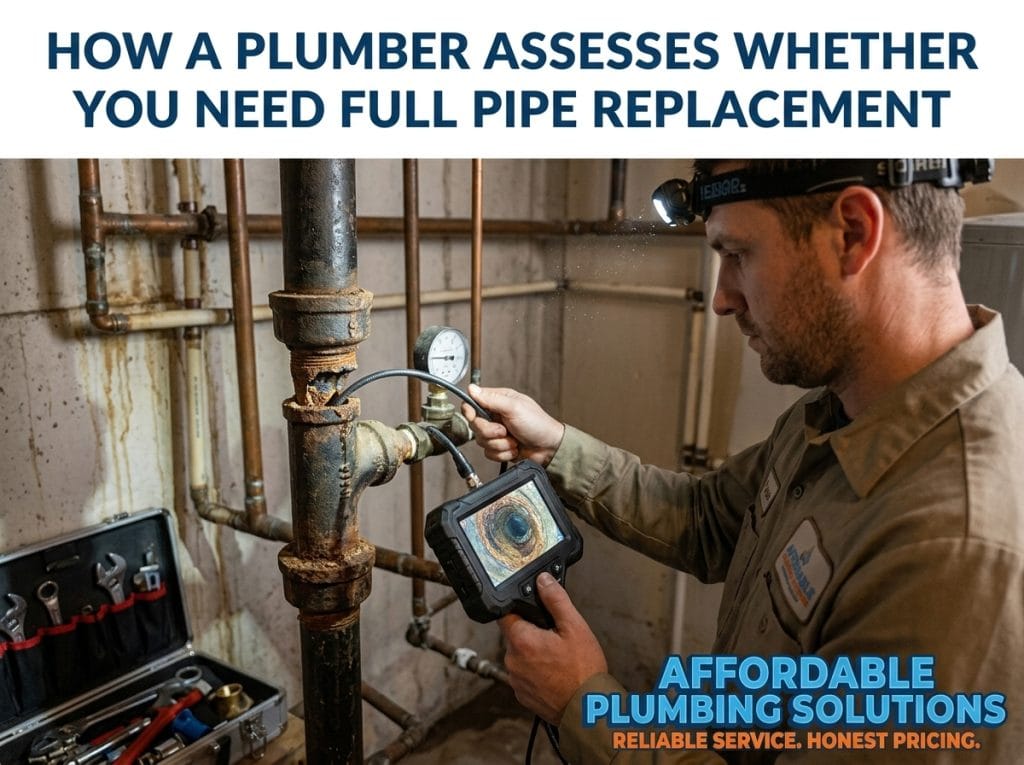
Knowing how a plumber evaluates your pipes can help you understand the inspection process and make informed decisions about repairs or replacement. Rather than relying on visible symptoms alone, professionals use specialized tools and proven testing methods to uncover hidden issues that could affect your home's plumbing performance. This guide explains the first stages of a professional pipe assessment and what each step reveals about the overall health of your plumbing system.
Why Pipe Assessment Matters Before Replacement
A professional pipe assessment is an essential step before deciding on full pipe replacement. Not every plumbing problem requires replacing the entire system. Issues such as a single leak, a damaged fitting, or low water pressure may often be resolved with targeted repairs. A thorough inspection helps plumbers identify the root cause of the problem and recommend the most effective and cost-efficient solution.
A detailed assessment also uncovers hidden issues that are not visible during a basic inspection. Plumbers evaluate the pipe material, age, overall condition, water pressure, and signs of internal damage before making a recommendation. This process helps homeowners avoid unnecessary replacement costs, prevents future plumbing failures, and ensures the right long-term solution for a safe, reliable, and efficient plumbing system.
Step-by-Step: How Plumbers Assess Your Pipes
Every plumbing inspection follows a structured process instead of relying on assumptions. Each step provides valuable information about the condition of the pipes, helping plumbers determine whether localized repairs are enough or if the entire system is showing signs of widespread deterioration.
Step 1 — Initial Visual Inspection
A plumber begins the assessment with a visual inspection of all accessible pipes and plumbing fixtures. This quick but important step helps identify visible damage, signs of wear, and potential problem areas before performing more detailed tests.
- Corrosion and rust that can weaken pipes and lead to leaks.
- Water stains or damp spots on walls, ceilings, and floors that may indicate hidden leaks.
- Cracked fittings and loose joints that can reduce the system's reliability.
- Mineral buildup or pipe discoloration that often points to aging pipes or hard water.
- Signs of previous repairs that may suggest recurring plumbing problems.
The findings from this inspection help the plumber decide whether the plumbing system only needs repairs or requires further testing to determine if full pipe replacement is necessary.
Step 2 — Checking Pipe Material and Age
After the visual inspection, the plumber identifies the type of pipes installed in the home. Different pipe materials have different strengths, common problems, and expected lifespans. Older materials are generally more likely to develop corrosion, leaks, or reduced water flow than modern piping.
The plumber also estimates the age of the plumbing system by reviewing the home's construction date, renovation history, and previous repairs. If the pipes are near or beyond their expected lifespan and multiple plumbing issues are present, full pipe replacement may be recommended instead of repeated repairs.
Step 3 — Water Pressure Testing
Water pressure testing shows how well the plumbing system delivers water throughout the home. Using a pressure gauge, the plumber measures water pressure at different fixtures to check whether it is too low, too high, or inconsistent.
Low pressure may indicate hidden leaks, corrosion, or mineral buildup inside the pipes. High pressure can place extra stress on pipes, joints, and fixtures. The test helps plumbers determine whether the problem is isolated or affects the entire plumbing system.
Step 4 — Camera/Video Pipe Inspection
Many plumbing problems develop inside walls or underground where they cannot be seen during a visual inspection. To inspect these hidden areas, plumbers use a waterproof camera that travels through the pipes and displays live video on a monitor.
The camera helps detect internal corrosion, cracks, root intrusion, mineral buildup, and damaged pipe sections. This detailed view allows plumbers to locate the exact problem and decide whether a repair is enough or if full pipe replacement is the better solution.
Step 5 — Checking for Hidden Leaks
Hidden leaks can develop behind walls, beneath floors, or under concrete slabs without obvious signs. Over time, these leaks may increase water bills, damage building materials, and create mold or mildew problems.
Plumbers use moisture meters, thermal imaging cameras, and leak detection equipment to locate concealed leaks without unnecessary damage to the home. If multiple hidden leaks are found throughout the plumbing system, replacing the pipes may be more practical than repairing each leak individually.
Step 6 — Soil and Foundation Check
For homes with underground plumbing, plumbers also inspect the surrounding soil and foundation. Ground movement, poor drainage, and tree roots can place pressure on buried pipes and cause cracks, leaks, or joint separation over time.
The plumber checks for foundation cracks, damp soil, standing water, and other signs of underground pipe damage. These findings help determine whether the plumbing issues are limited to one area or affecting the entire system, making full pipe replacement a better long-term option.
Tools Plumbers Use During a Professional Pipe Assessment
Professional plumbing inspections rely on specialized equipment that provides accurate information beyond what can be seen with the naked eye. These tools allow plumbers to diagnose problems efficiently while minimizing unnecessary damage to walls, floors, and landscaping.
Common assessment tools include:
- Video inspection cameras for examining the inside of pipes without excavation.
- Water pressure gauges to measure system performance and identify pressure-related issues.
- Moisture meters for detecting hidden water behind walls, ceilings, and floors.
- Thermal imaging cameras to locate concealed leaks by identifying temperature variations.
- Acoustic leak detection equipment that pinpoints the sound of leaking water within hidden pipes.
- Electronic pipe locators for tracing underground plumbing before excavation or repairs.
- Water quality testing kits to identify signs of corrosion, mineral content, or contamination that may affect pipe condition.
- Flashlights, inspection mirrors, and borescopes for evaluating hard-to-reach plumbing components.
These advanced diagnostic tools help plumbers make evidence-based recommendations rather than relying on assumptions. As a result, homeowners receive a clearer understanding of their plumbing system's condition and can confidently decide whether repairs or full pipe replacement provide the best long-term solution.
Signs That May Prompt a Plumber to Recommend a Full Pipe Inspection
A plumber may recommend a full pipe inspection when several plumbing problems appear at the same time or keep returning. While a single issue can often be repaired, repeated warning signs may indicate hidden damage or aging pipes throughout the home. A complete inspection helps identify the root cause and determines whether repairs or full pipe replacement is the best solution.
- Frequent leaks in different areas of the home.
- Low water pressure that affects multiple fixtures.
- Rusty or discolored water coming from faucets.
- Unusually high water bills without increased water usage.
- Visible pipe corrosion or rust on exposed plumbing.
- Damp walls, ceilings, or floors caused by hidden leaks.
- Mold or mildew growth near plumbing lines.
- Strange noises such as banging or rattling pipes.
- Slow water flow due to internal pipe buildup.
- An aging plumbing system that has exceeded its expected lifespan.
When Full Pipe Replacement Becomes Necessary
Full pipe replacement becomes necessary when the plumbing system has extensive damage that repairs cannot solve. Plumbers evaluate the condition of the entire system before making this recommendation. If the pipes continue to fail in different areas, replacing the complete network is often more cost-effective than paying for frequent repairs. A new plumbing system also improves reliability, water flow, and long-term performance.
Whole-House Corrosion
Corrosion weakens pipes from both the inside and outside. It develops gradually as metal reacts with water, oxygen, and minerals. Over time, corrosion reduces pipe strength and increases the risk of leaks, rust, and poor water quality.
During the inspection, plumbers check for rust, discoloration, mineral buildup, and thinning pipe walls. They may also use a camera inspection to look inside the pipes. If corrosion is found throughout the plumbing system, replacing all the pipes is usually the safest long-term solution.
Pipes Older Than Their Expected Lifespan
Every plumbing material has an expected service life. As pipes get older, they become more prone to corrosion, leaks, cracks, and reduced water flow. During the assessment, plumbers compare the pipe's age with its overall condition to determine whether repairs are still practical or if full pipe replacement is the better long-term solution.
Pipe Material
Average Lifespan
Common Signs of Aging
Copper
50–70 years
Corrosion, pinhole leaks, reduced water flow
PEX
40–50 years
Cracks, UV damage, worn fittings
Galvanized Steel
40–50 years
Rust, internal corrosion, low water pressure
Cast Iron
50–100 years
Cracks, rust, corrosion, recurring drain problems
Polybutylene
10–30 years
Brittle pipes, unexpected leaks, frequent failures
Recurring Leaks in Multiple Locations
One plumbing leak does not always mean the entire system is failing. However, repeated leaks in different rooms usually indicate widespread pipe deterioration. Repairing one section may not stop new leaks from appearing elsewhere.
Plumbers review the home's repair history and inspect previously repaired areas. They also check for hidden leaks that may not be visible. If leaks continue occurring throughout the home, replacing the entire plumbing system often becomes the most practical and cost-effective solution.
Outdated Piping Materials
Some older pipe materials no longer meet modern plumbing standards. They are more likely to corrode, crack, or fail as they age. Even if they are still working, their reliability may continue to decline over time.
During the inspection, plumbers identify the type of piping installed in the home. Materials such as old galvanized steel, aging polybutylene, or worn cast iron often require closer evaluation. If these pipes show signs of deterioration, replacing them with modern materials can improve plumbing performance and reduce future repair costs.
Conclusion
A professional pipe assessment is the most reliable way to determine whether your home needs repairs or a full pipe replacement. Instead of making decisions based on visible symptoms alone, plumbers evaluate the pipe material, age, water pressure, hidden leaks, and overall condition of the plumbing system. This thorough approach helps identify the root cause of recurring plumbing problems and ensures the right solution is recommended.
Whether your pipes are showing signs of corrosion, frequent leaks, or have simply reached the end of their expected lifespan, an early inspection can prevent costly water damage and unexpected failures. Investing in a professional assessment allows homeowners to make informed decisions, improve plumbing performance, and extend the reliability of their home's water supply system for years to come.
FAQs
How long do pipes usually last before replacement?
The lifespan of plumbing pipes depends on the material. Copper pipes typically last 50–70 years, PEX around 40–50 years, galvanized steel 40–50 years, and cast iron up to 100 years under ideal conditions.
Can I repair pipes myself instead of replacing them?
Small issues like tightening a loose fitting may be handled by homeowners, but recurring leaks, corrosion, or aging pipes should be inspected by a licensed plumber to determine if replacement is necessary.
How much does full pipe replacement cost?
The cost varies depending on the home's size, pipe material, labor, accessibility, and local rates. A professional inspection provides the most accurate estimate based on your plumbing system.
What is the difference between repiping and spot repair?
Spot repair fixes a single damaged section of pipe, while repiping replaces most or all of the plumbing system. Repiping is usually recommended when multiple pipes are failing or the entire system has reached the end of its lifespan.
How do you know if pipes need to be replaced?
Frequent leaks, rusty water, low water pressure, visible corrosion, and an aging plumbing system are common signs that pipes may need replacement. A professional pipe assessment confirms whether repairs are enough or full replacement is the better long-term solution.
REQUEST A SERVICE

Testimonials
Our Customer Feedback









Our customer feedback
Make Us Your First-Choice Plumbing Company
Are you tired of dealing with unreliable plumbers? Do you need a local plumbing company you can trust for all your plumbing needs? Your search ends with us. We are the plumbers to trust if you need prompt, affordable and reliable plumbing service in Carmichael. When you invite us into your home, you’re not just getting a temporary fix; you’re ensuring a lasting solution from a team that treats your plumbing needs with the utmost seriousness. Our prompt response to emergencies and our fervent dedication to solving your plumbing woes set us apart.
Get in touch
Thank you! Your submission has been received!
Oops! Something went wrong while submitting the form.
Where we serve
Our Service Areas
We proudly provide professional plumbing services across surrounding communities, delivering reliable repairs, installations, and maintenance wherever dependable plumbing support is needed.
- Sacramento
- Roseville
- Carmichael
- El Dorado Hills
- Orangevale
- Rocklin
- Granite Bay
- Citrus Heights
- Antelope
- Arden-Arcade
- Fair Oaks
- Folsom
- Lincoln
- Loomis
- Rancho Cordova
- Rio Linda
- North Highlands
- Elk Grove