
Affordable Plumbing was great to deal with! Had a problem with a very niche gas line in my home. Derek came right out to look at it and determined it would take a specialty fireplace company to replace. Really appreciated his honesty, integrity and communication. I’ll absolutely use them for my next plumbing needs.

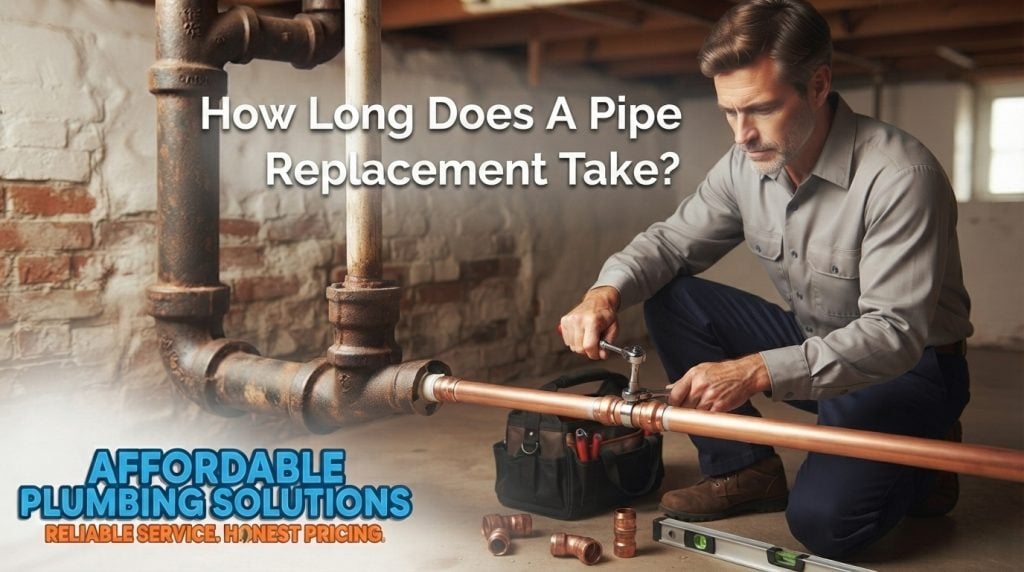
How Long Does A Pipe Replacement Take?
Plumbing pipes are built to provide reliable water flow for decades, but aging pipes eventually begin to show signs of wear. Corrosion, mineral buildup, leaks, tree root intrusion, and shifting soil can gradually weaken a plumbing system and reduce its efficiency. While minor issues can often be repaired, repeated plumbing problems may indicate that a full pipe replacement is the most effective long-term solution.
Replacing old or damaged pipes helps improve water flow, prevent costly water damage, and increase the overall reliability of the plumbing system. Many homeowners wonder how long the process will take before starting a project. The answer depends on several factors, including the size of the property, the condition of the existing pipes, the materials being installed, and the replacement method chosen. Understanding what affects the timeline can help property owners prepare for the project and minimize disruptions during the replacement process.
What Is Pipe Replacement?
Pipe replacement involves removing damaged, aging, or worn-out pipes and installing new ones to restore a plumbing system's performance. It is often recommended when leaks, corrosion, or pipe damage become too severe for repairs, helping improve water flow efficiency and long-term system reliability.
Pipe Replacement and What It Actually Involves
The pipe replacement process begins with a detailed pipe inspection to identify leaks, corrosion, and other signs of pipe damage. This helps determine whether a partial pipe replacement or a full plumbing system replacement is needed.
After the assessment, the old pipes are removed and replaced with new pipe materials. Once installation is complete, leak testing and pressure testing are performed to verify proper water flow and ensure the system operates efficiently.
Types of Pipes Most Commonly Replaced
Certain pipe materials are more likely to require replacement due to age, corrosion, leaks, or reduced performance. Replacing outdated pipes helps improve water flow efficiency, reduce plumbing issues, and extend the lifespan of the plumbing system.
- Galvanized Steel Pipes – Often replaced due to rust buildup, pipe corrosion, and water pressure issues.
- Polybutylene Pipes – Prone to cracking and failure over time, making replacement a common recommendation.
- Copper Pipes – May need replacement when recurring pinhole leaks or corrosion affect performance.
- Lead Pipes – Frequently replaced to improve water quality and meet modern plumbing standards.
- Sewer Line Pipes – Can require replacement due to tree root intrusion, ground shifting, or severe damage.
- Cast Iron Pipes – Older systems often experience corrosion and structural deterioration, leading to replacement needs.
Factors That Affect How Long Pipe Replacement Takes
Several factors can affect the pipe replacement timeline, including the size and condition of the pipes, accessibility, replacement method, and permit requirements. While some projects can be completed quickly, more complex plumbing system replacements may take longer due to additional labor and inspections.
Pipe Size, Material, and Accessibility
The size, material, and location of a pipe can significantly impact how long a pipe replacement takes. Larger pipes, hard-to-reach areas, and older pipe materials often require more labor and specialized equipment, increasing the overall project timeline.
- Pipe Size – Larger pipes typically take longer to remove and install than smaller residential plumbing lines.
- Pipe Material – Older materials such as galvanized steel pipes may require more time for safe removal and replacement.
- Accessibility – Pipes located behind walls, under slabs, or underground are more time-consuming to access.
- Property Type – Commercial and industrial plumbing systems often involve larger and more complex piping networks.
- Installation Requirements – Certain pipe materials may require specialized tools and installation techniques.
Extent of Damage and Complexity of the Job
The severity of pipe damage is one of the biggest factors affecting how long a replacement takes. A localized leak may only require a damaged pipe replacement involving a small section of piping. In contrast, widespread deterioration throughout the plumbing network may require a full pipe replacement that affects multiple areas of the property.
Project complexity can also influence scheduling. Aging plumbing systems often contain hidden issues that become visible only after work begins. Problems such as corroded pipes, water pressure issues, pipe failure, or hidden leaks can increase labor requirements and lead to additional repairs before the new system can be installed properly.
Method of Replacement Used
Different pipe replacement methods can significantly affect project duration. Traditional replacement methods usually involve excavation, cutting into walls, or removing flooring to access damaged pipes. While effective, these approaches often require additional labor and restoration work after installation is complete.
Modern techniques such as pipe bursting can reduce the amount of excavation required for underground pipe replacement. This trenchless method allows new pipes to be installed while minimizing disruption to the surrounding property. In many situations, less digging means a faster project timeline and reduced impact on daily activities.
Permit Requirements and Inspection Delays
Permit approvals and inspections can affect the overall pipe replacement timeline, especially for major plumbing system upgrades, sewer pipe replacement, or underground pipe replacement projects. While these requirements help ensure the work meets local building codes, delays in approvals or scheduling can extend the completion date.
- Apply for permits before the project starts whenever possible.
- Work with a licensed plumbing contractor familiar with local regulations.
- Schedule required inspections early to avoid waiting periods.
- Keep project documents and permits easily accessible.
- Confirm inspection requirements before installation begins.
- Address any code-related issues promptly to prevent re-inspections.
- Plan extra time into the project schedule for unexpected approval delays.
What Speeds Up or Slows Down the Replacement Process?
The time required for a pipe replacement can vary based on site conditions, project complexity, and planning. Factors such as pipe accessibility, replacement methods, and the condition of the plumbing system can either shorten or extend the overall pipe replacement timeline.
Factor
Speeds Up the Process
Slows Down the Process
Pipe Accessibility
Exposed and easy-to-reach pipes
Pipes behind walls, under slabs, or underground
Extent of Damage
Minor, localized pipe damage
Widespread corrosion or full pipe replacement
Replacement Method
Trenchless methods like pipe bursting
Traditional excavation and extensive pipe removal
Project Size
Small residential pipe replacement
Large commercial or industrial plumbing projects
Permits & Inspections
Pre-approved permits and quick inspections
Permit delays and multiple inspections
System Condition
Well-maintained plumbing systems
Aging plumbing systems with hidden issues
Signs You Need Pipe Replacement
Plumbing pipes often show warning signs before a major failure occurs. Recognizing these issues early can help prevent costly water damage, improve water flow efficiency, and determine whether a pipe replacement is a better solution than ongoing repairs.
- Frequent Leaks – Repeated leaks in different areas may indicate widespread pipe deterioration.
- Corroded Pipes – Visible rust, discoloration, or pipe corrosion can weaken the plumbing system over time.
- Low Water Pressure – Aging or damaged pipes may restrict water flow and reduce pressure throughout the property.
- Discolored Water – Brown, yellow, or rusty water can be a sign of corrosion inside older pipes.
- Recurring Plumbing Repairs – Constant repairs may suggest that replacing the pipes is more cost-effective long-term.
- Pinhole Leaks – Multiple pinhole leaks often indicate that the pipes are nearing the end of their lifespan.
- Aging Plumbing Systems – Older pipe materials are more likely to experience leaks, corrosion, and pipe failure.
- Unusual Water Bills – A sudden increase in water usage costs may point to hidden leaks within the plumbing network.
What to Expect During the Pipe Replacement Process
Knowing what happens during a pipe replacement can help reduce uncertainty and make the project easier to manage. While each property has unique requirements, most replacement projects follow a similar sequence of inspection, removal, installation, and testing.
The process is designed to improve system reliability while minimizing disruption to daily activities. Working with an experienced plumbing contractor can help ensure the project is completed efficiently and according to local building requirements.
Initial Inspection and Project Planning
A pipe replacement starts with an inspection to identify damaged areas and determine the best replacement approach. Proper planning helps avoid delays and keeps the project organized.
- Inspect the condition of existing pipes.
- Locate leaks and damaged sections.
- Determine the replacement scope.
- Choose the appropriate replacement method.
- Estimate the project timeline.
- Identify any permit requirements.
- Schedule the replacement work.
Pipe Removal and New Pipe Installation
Once planning is complete, technicians remove the damaged or outdated pipes. Depending on the pipe location, this may involve excavation, wall access, or trenchless replacement methods.
New pipes are then installed and connected to the water supply system or drainage system. Durable materials such as PVC pipes and PEX pipes are often used to improve long-term performance and reliability.
Testing, Inspection, and Final Completion
After installation, pressure testing and leak testing are performed to verify that the new system is working properly. These tests help identify any issues before the plumbing system returns to regular use.
If required, a final inspection is completed to confirm compliance with local codes. Once approved, the pipe replacement project is finished, and the upgraded system is ready to operate efficiently.
Conclusion
The time required for a pipe replacement depends on several factors, including the size of the plumbing system, the condition of the existing pipes, accessibility, and the replacement method used. While smaller projects may be completed within a day, larger residential or commercial pipe replacement jobs can take several days to finish. Understanding these factors helps property owners plan ahead and set realistic expectations for the project.
A professionally completed pipe replacement can improve water flow efficiency, reduce the risk of future leaks, and increase the reliability of the plumbing system. Working with experienced professionals, securing permits early, and addressing plumbing issues before they worsen can help keep the project on schedule and minimize disruptions.
FAQs
Can pipe replacement be done in one day?
Yes, some small or partial pipe replacement projects can be completed in a single day. However, larger or more complex replacements may require additional time.
Will pipe replacement disrupt my daily routine?
Some disruption is normal, especially if water service needs to be temporarily shut off. The level of inconvenience depends on the size of the project and the areas being accessed.
How do I know if my plumber is working efficiently?
An efficient plumber communicates clearly, follows the project timeline, performs proper inspections, and keeps the work area organized throughout the replacement process.
How long does a full house repipe take?
A full house repipe typically takes anywhere from a few days to about a week, depending on the size of the home, pipe accessibility, and the complexity of the plumbing system.
How much should a whole-house repipe cost?
The cost of a whole-house repipe varies based on the home's size, pipe materials, labor requirements, and local market rates. Larger homes and more complex installations generally cost more.
How invasive is repiping a house?
Repiping can involve opening walls, ceilings, or floors to access existing pipes. The level of disruption depends on the layout of the home and the pipe replacement methods being used.
REQUEST A SERVICE

Testimonials
Our Customer Feedback









Our customer feedback
Make Us Your First-Choice Plumbing Company
Are you tired of dealing with unreliable plumbers? Do you need a local plumbing company you can trust for all your plumbing needs? Your search ends with us. We are the plumbers to trust if you need prompt, affordable and reliable plumbing service in Carmichael. When you invite us into your home, you’re not just getting a temporary fix; you’re ensuring a lasting solution from a team that treats your plumbing needs with the utmost seriousness. Our prompt response to emergencies and our fervent dedication to solving your plumbing woes set us apart.
Get in touch
Thank you! Your submission has been received!
Oops! Something went wrong while submitting the form.
Where we serve
Our Service Areas
We proudly provide professional plumbing services across surrounding communities, delivering reliable repairs, installations, and maintenance wherever dependable plumbing support is needed.
- Sacramento
- Roseville
- Carmichael
- El Dorado Hills
- Orangevale
- Rocklin
- Granite Bay
- Citrus Heights
- Antelope
- Arden-Arcade
- Fair Oaks
- Folsom
- Lincoln
- Loomis
- Rancho Cordova
- Rio Linda
- North Highlands
- Elk Grove