
Affordable Plumbing was great to deal with! Had a problem with a very niche gas line in my home. Derek came right out to look at it and determined it would take a specialty fireplace company to replace. Really appreciated his honesty, integrity and communication. I’ll absolutely use them for my next plumbing needs.

How Long Does Water Heater Replacement Take?
A water heater plays an essential role in maintaining comfort and convenience in your home by providing hot water for showers, cleaning, laundry, and everyday tasks. When your system stops working properly, one of the biggest concerns is understanding how long water heater replacement takes and how quickly your home’s hot water supply can be restored. The timeline depends on several factors, including the type of unit, installation requirements, existing plumbing conditions, and whether additional repairs are needed.
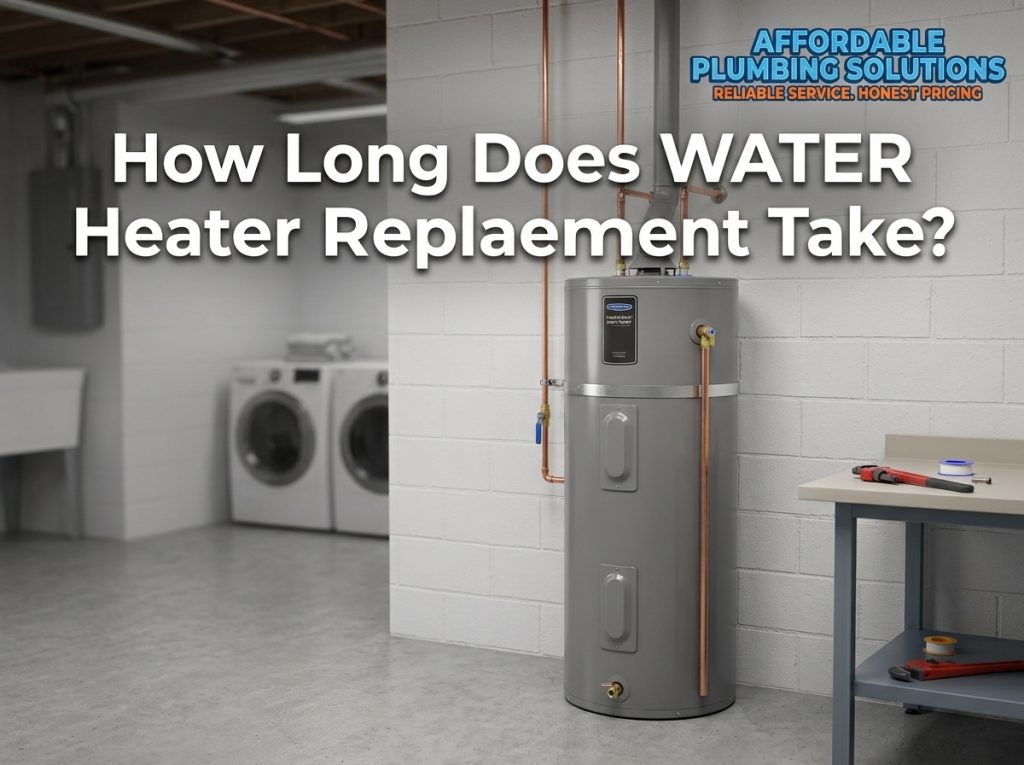
A professional water heater replacement can often be completed within a few hours, but every home has different requirements. Whether you need to replace a water heater because of age, poor performance, leaks, or complete system failure, understanding the installation process helps you plan better. This guide explains the factors affecting replacement time, the average installation timeline, and what homeowners should expect when upgrading their hot water system.
What Affects Water Heater Replacement Time?
The time required for a water heater installation depends on several factors that influence the overall replacement timeline. The type of unit, condition of existing plumbing, accessibility of the installation area, fuel connections, and local plumbing codes can either speed up or extend the project. A professional licensed plumber evaluates the system before starting work to identify any required repairs or upgrades, ensuring the new unit is installed safely and delivers reliable long-term water heater performance.
Type of Water Heater (Tank vs Tankless)
The type of water heater you choose has a major impact on the replacement timeline. A tank water heater replacement is usually faster because the new unit can often use the existing water lines and connections. Replacing an old tank model with a similar size and fuel type usually requires fewer changes.
A tankless water heater replacement often takes more time because the installation requirements are different. It may require updated plumbing connections, upgraded electrical wiring, improved ventilation, or gas system adjustments. Although installation may take longer, tankless systems can improve water heater efficiency and provide continuous hot water.
Fuel Type (Gas vs Electric)
The fuel type of your water heater affects the overall installation time. Electric units are often quicker to replace because they mainly require water connections and electrical setup. If the existing electrical wiring is suitable, the replacement process can move faster.
Gas water heaters require additional safety steps during installation. A professional must inspect the gas line connections, check ventilation, and test the system carefully. These steps help maintain plumbing safety and prevent gas-related issues.
Accessibility of Installation Area
The location of your water heater can affect how quickly the replacement is completed. Units installed in open areas like garages or large basements are usually easier to access. This allows technicians to remove the old unit and install the new system more efficiently.
Water heaters placed in tight spaces, closets, attics, or crowded utility rooms may require extra time. Limited access can make removal and installation more challenging. Professionals may need additional effort to safely remove old unit and complete the replacement.
Age & Condition of Existing Plumbing
The condition of your existing plumbing system plays an important role in replacement time. If pipes, valves, and connections are in good condition, the installation can usually be completed quickly. A simple replacement requires fewer adjustments and less labor.
Older plumbing systems may have corrosion, damaged fittings, or hidden leaks that need repairs before installation. Issues may require leak repair or pipe replacement to support the new unit. A professional plumbing inspection helps identify problems and improves overall water heater performance.
Permit or Code Requirements
Permits and regulations can also affect how long a water heater replacement takes. Some areas require approvals for specific installations, especially gas units, tankless systems, or major plumbing changes. These requirements ensure the work follows local plumbing codes and safety standards.
A professional plumbing contractor understands permit requirements and helps complete the installation correctly. Although inspections may add extra time, they ensure your new system is safe, efficient, and properly installed according to regulations.
Average Time for Water Heater Replacement
The average replacement time for a water heater depends on the type of unit, installation requirements, and condition of the existing system. In most cases, a standard water heater replacement takes around 2 to 4 hours when replacing a similar model. More complex projects, such as a tankless water heater replacement, plumbing upgrades, or gas and electrical modifications, may take longer. A professional licensed plumber can complete the installation efficiently while ensuring proper connections, safety, and reliable water heater performance.
- Standard Tank Replacement: Usually takes about 2–4 hours when existing connections are in good condition.
- Tankless Installation: May require extra time due to new plumbing, ventilation, or electrical requirements.
- Emergency Replacement: Same-day service may be available when urgent hot water restoration is needed.
- Plumbing Repairs: Damaged pipes, leaks, or outdated connections can increase the installation timeline.
- Permit Requirements: Local inspections and code approvals may add additional time.
- Installation Location: Tight spaces or difficult access areas can make removal and installation slower.
Choosing an experienced plumbing contractor helps reduce delays and ensures your new hot water system is installed correctly. Proper planning, professional installation, and regular water heater maintenance can improve efficiency and extend the lifespan of your unit.
Step-by-Step Water Heater Replacement Process
The water heater replacement process involves several important steps that help ensure your new system operates safely and efficiently. Although the exact timeline depends on the unit type, installation location, and existing plumbing condition, most replacements follow a similar procedure. Understanding each stage helps homeowners prepare for the service and know what to expect during installation.
1. Shutting Off Power/Gas & Water
The first step of the water heater replacement process is safely shutting off all connected utilities. The plumber turns off the power supply for electric units, closes the gas valve for gas models, and stops the water supply to prevent leaks during removal. This step usually takes about 10–15 minutes and creates a safe working environment for the installation. Proper shutdown procedures help protect the home, equipment, and technician during the replacement.
2. Draining the Old Tank
After the utilities are disconnected, the next step is to drain the tank completely. A plumber attaches a drain hose to remove the stored water before the unit is moved. This process usually takes 20–30 minutes, depending on the tank size and sediment buildup. Fully draining the system makes it safer and easier to remove old unit components without causing water spills or damage.
3. Disconnecting & Removing Old Unit
Once the tank is empty, the plumber disconnects the existing water heater from all connected systems. This includes removing water lines, disconnecting gas or electrical connections, and separating other components if needed. The old unit is then carefully removed from its location while checking for damaged pipes or connection issues. If problems are found, additional services like leak repair or pipe replacement may be required before installing the new system.
4. Installing the New Water Heater
Installing the new unit is one of the most important steps because proper placement affects safety and performance. The plumber positions the new water heater, secures it correctly, and prepares it for connection with the existing plumbing system. This process usually takes 60–90 minutes, depending on the type of unit and installation requirements. Professional water heater installation helps improve efficiency, reliability, and long-term water heater performance.
5. Connecting Water, Gas/Electric Lines
After placing the new unit, the plumber reconnects all necessary supply lines and utility connections. This includes completing plumbing connections, attaching water pipes, connecting gas lines for gas models, or setting up electrical wiring for electric systems. The installer carefully checks each connection to prevent leaks and ensure safe operation. Proper connections help improve water heater efficiency and reduce future maintenance issues.
6. Testing for Leaks & Proper Function
The final step is testing the new water heater to confirm it operates safely and correctly. The plumber checks water flow, temperature settings, pressure levels, and all gas, electrical, and plumbing connections for possible issues. Any leaks or performance problems are fixed before the system is fully activated. This final inspection completes the hot water restoration process and ensures the new unit is ready for daily household use.
Signs You Need Same-Day Water Heater Replacement
A water heater emergency can disrupt your routine and create serious risks if the problem is ignored. When your system shows signs of major failure, same-day water heater replacement can help restore hot water quickly and prevent further damage. A professional plumbing contractor can inspect the unit and recommend the safest solution based on its condition and water heater performance.
- Water Leaking Around the Tank: Visible leaks often indicate internal tank damage that cannot be fixed with simple repairs. Immediate replacement can help prevent water damage and costly repairs.
- Complete Loss of Hot Water: If your water heater stops producing hot water, the heating components or entire system may have failed. A replacement may be the fastest way to restore your hot water system.
- Rusty or Dirty Hot Water: Discolored water usually points to corrosion inside the tank. This is a common sign that the unit is wearing out and may need replacement.
- Strange Banging or Rumbling Sounds: Loud noises often result from heavy sediment buildup inside older tanks. When cleaning or repairs no longer improve performance, replacement may be necessary.
- Frequent Repairs: Repeated water heater repair costs can add up quickly. Replacing an unreliable unit may provide better efficiency and long-term savings.
- Old Water Heater System: An aging unit is more likely to develop leaks, poor heating, and efficiency problems. Upgrading to a newer model can improve water heater efficiency.
- Poor Water Heating Performance: If hot water runs out quickly or takes too long to heat, your system may no longer meet your household needs.
- Gas Smell Near the Unit: A gas odor can indicate a serious safety issue with gas line connections or the burner system. Contact professional emergency plumbing services immediately.
- Visible Corrosion on the Tank: Rust around the tank, valves, or connections can weaken the system and increase the chance of failure.
DIY Water Heater Replacement Time vs Hiring a Professional
Replacing a water heater yourself may seem affordable, but it often requires time, specialized skills, and knowledge of plumbing, electrical, or gas systems. Hiring a professional licensed plumber can make the process faster and safer while ensuring proper water heater installation, code compliance, and reliable long-term performance.
Factor
DIY Water Heater Replacement
Professional Water Heater Replacement
Average Time Required
Usually takes 6–12 hours or longer, depending on experience and unexpected issues
Typically completed within 2–4 hours by an experienced plumbing contractor
Installation Knowledge
Requires knowledge of plumbing connections, electrical wiring, gas systems, and safety procedures
Professionals are trained to handle tank and tankless water heater installations correctly
Tools & Equipment
Requires purchasing or renting specialized tools for removal and installation
Plumbers arrive with the necessary tools and equipment to complete the job efficiently
Safety Risks
Higher risk of gas leaks, electrical problems, water damage, or incorrect installation
Follows plumbing safety standards and proper installation procedures
Permits & Codes
Homeowners may not be familiar with permit requirements or local plumbing codes
Professionals understand code requirements and can manage inspections when needed
Problem Detection
Hidden issues such as damaged pipes or faulty connections may be missed
Includes professional inspection to identify leaks, pipe issues, or required repairs
Overall Cost
Lower labor cost but possible additional expenses from mistakes or repairs
Higher upfront cost but provides reliable installation and reduces future problems
How to Speed Up the Replacement Process
Homeowners can take several steps to make the replacement process quicker and more efficient. Before the plumber arrives, clear the area around the water heater, remove stored items from nearby spaces, and make sure the installation location is easily accessible. Providing details about the existing system can also help the technician prepare the correct equipment and replacement parts.
Choosing the right unit in advance and working with an experienced professional can significantly reduce delays. Regular water heater maintenance also helps identify problems before complete failure occurs, allowing homeowners to schedule replacements at a convenient time instead of dealing with unexpected emergencies. Proper preparation, professional installation, and timely decisions help ensure a smooth and efficient replacement experience.
Conclusion
Replacing a water heater is an important home improvement project that requires proper planning, professional skills, and attention to safety. The total installation time depends on several factors, including the type of system, fuel source, plumbing condition, accessibility, and local requirements. While a standard water heater replacement may take only a few hours, more complex installations may require additional time for upgrades or repairs.
Working with an experienced licensed plumber helps ensure your new hot water system is installed correctly and performs efficiently. Professional installation reduces the risk of leaks, improves water heater efficiency, and helps extend the lifespan of your equipment. With proper installation and regular water heater maintenance, homeowners can enjoy reliable hot water and fewer unexpected problems in the future.
Frequently Asked Questions
How long does a tankless water heater installation take?
A tankless water heater installation usually takes between 4 and 8 hours, depending on existing plumbing, electrical requirements, and ventilation needs. Converting from a tank system to a tankless unit may require additional modifications.
Can a water heater be replaced in one day?
Yes, most standard water heater replacement projects can be completed within one day. A professional plumber can often remove the old unit, install the new system, and restore hot water within a few hours.
Do I need a permit to replace a water heater?
Permit requirements vary by location and installation type. Many areas require permits for gas systems, tankless units, or changes involving plumbing, electrical, or gas line connections.
How long does it take to install a tankless water heater?
A tankless water heater replacement typically takes several hours because it may involve new plumbing connections, electrical upgrades, ventilation adjustments, or gas system modifications.
Do you need a permit to replace a water heater?
In many areas, a permit is required to replace certain water heaters to confirm compliance with local plumbing codes and safety regulations. A professional plumbing contractor can help determine the requirements for your location.
Can I replace a water heater myself to save time?
DIY replacement is possible for experienced homeowners, but it can be risky and time-consuming without proper knowledge. Hiring a professional helps avoid installation mistakes, safety issues, and future repair costs.
REQUEST A SERVICE

Testimonials
Our Customer Feedback









Our customer feedback
Make Us Your First-Choice Plumbing Company
Are you tired of dealing with unreliable plumbers? Do you need a local plumbing company you can trust for all your plumbing needs? Your search ends with us. We are the plumbers to trust if you need prompt, affordable and reliable plumbing service in Carmichael. When you invite us into your home, you’re not just getting a temporary fix; you’re ensuring a lasting solution from a team that treats your plumbing needs with the utmost seriousness. Our prompt response to emergencies and our fervent dedication to solving your plumbing woes set us apart.
Get in touch
Thank you! Your submission has been received!
Oops! Something went wrong while submitting the form.
Where we serve
Our Service Areas
We proudly provide professional plumbing services across surrounding communities, delivering reliable repairs, installations, and maintenance wherever dependable plumbing support is needed.
- Sacramento
- Roseville
- Carmichael
- El Dorado Hills
- Orangevale
- Rocklin
- Granite Bay
- Citrus Heights
- Antelope
- Arden-Arcade
- Fair Oaks
- Folsom
- Lincoln
- Loomis
- Rancho Cordova
- Rio Linda
- North Highlands
- Elk Grove