

Affordable Plumbing was great to deal with! Had a problem with a very niche gas line in my home. Derek came right out to look at it and determined it would take a specialty fireplace company to replace. Really appreciated his honesty, integrity and communication. I’ll absolutely use them for my next plumbing needs.
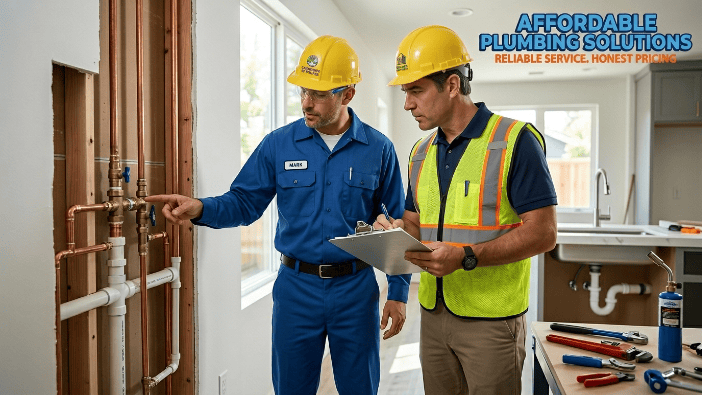
Is Plumbing Work Regulated in Sacramento?
Plumbing systems are critical components of public health and safety, meaning any structural changes can impact an entire community's water supply. In the capital city, plumbing work is governed by a strict network of state mandates and localized municipal amendments designed to prevent hazardous contamination and code violations. Navigating these complex rules requires a clear understanding of the legal boundary between a quick DIY fix and work that requires professional oversight.
Whether you are a homeowner planning a minor renovation or a property manager overseeing a commercial upgrade, understanding California’s strict regulatory framework is essential.
The state explicitly dictates who can legally perform plumbing installations and under what conditions a formal permit must be secured. This comprehensive guide breaks down the essential legal requirements enforced by state boards and building departments to ensure your next project remains fully compliant.
Overview of Plumbing Regulations
California maintains some of the most stringent plumbing standards in the nation to ensure environmental sustainability and systemic safety across all municipalities. The foundational framework relies on a dual system of uniform technical criteria and strict professional licensing enforcement.
By combining state-level mandates with rigorous local oversight, the state minimizes the risks of structural water contamination and hazardous sewer gas leaks. Property owners must navigate these baseline legal structures before authorizing any physical alterations to their piping networks or main utility lines.
State Code Mandates
The structural blueprint for all regional plumbing work is determined by the Plumbing Code (Title 24, Part 5). This extensive legal document establishes the precise technical criteria for waste disposal, venting, gas appliances, and potable water distribution systems.
The code undergoes regular updates to incorporate modern engineering advancements, structural safety protocols, and resource conservation goals. Failure to comply with these overarching state guidelines during a renovation can result in immediate code enforcement actions and heavy financial penalties.
CSLB Licensing Requirements
The Contractors State License Board (CSLB) strictly regulates the professional industry by requiring a valid specialty license for major projects. Under state law, any plumbing job that exceeds a total consumer cost of $500 for labor and materials must be performed by a licensed C-36 plumbing contractor.
This legal threshold protects property owners from substandard workmanship, fraud, and unsafe structural modifications executed by unbonded individuals. Hiring an unlicensed worker for a major project strips the property owner of crucial legal protections and insurance coverage options.
Do You Need a Permit for Plumbing Work?
A common misconception among property owners is that building permits are only required for large-scale commercial developments or structural home additions. In reality, local building authorities mandate official permits for any plumbing modification that alters the existing footprint or core components of a system.
Procuring the proper permit ensures that an official city inspector validates the safety and compliance of the work before it is finalized. Attempting to bypass this administrative step can complicate future property sales and lead to forced, costly tear-outs of completed work.
Mandatory Permit Triggers
Building authorities explicitly list the exact types of structural plumbing modifications that require formal permit approval prior to installation. This includes seemingly standard replacements, such as installing a new water heater, rerouting lines during a bathroom remodel, or replacing a main sewer lateral line.
Any work involving underground gas piping or the relocation of drainage fixtures also automatically triggers a mandatory permit requirement. These regulations ensure that high-risk systems are carefully monitored and verified by local municipal code experts.
Exempt Minor Repairs
Conversely, local building codes do provide specific exemptions for routine maintenance tasks that do not alter the system's core design. Property owners can legally clear simple drain clogs, stop localized faucet leaks, and replace minor accessible components without filing paperwork.
These exemptions are strictly limited to simple repairs that do not require cutting into structural walls or replacing main distribution lines. Understanding the boundaries of these exemptions prevents unnecessary administrative delays while keeping minor property maintenance efficient and cost-effective.
Specific Rules — Local Additions to State Law
While state law establishes the baseline criteria, it introduces localized amendments to address regional geographic, climatic, and water conservation needs.
The municipal Community Development Department enforces specific guidelines regarding water-efficiency metrics, backflow prevention assemblies, and exact cleanout placements for residential properties.
Property owners must ensure their contractors are fully aware of these municipal distinctions, as state-level compliance alone does not guarantee a passing grade during a local city inspection.
Key Local Requirements
The local jurisdiction enforces highly specific water conservation standards that mandate ultra-low-flow fixtures to optimize regional water management. Every newly installed toilet, showerhead, and faucet must meet strict gallons-per-minute limits that often exceed baseline national requirements.
Furthermore, local codes require dedicated thermal expansion tanks on water heaters to handle pressure fluctuations within closed municipal loops.
Finally, exterior sewer cleanouts must be installed at precise intervals and locations to demarcate the exact boundary between private property liability and city utility maintenance.
- Licensing Mandate: Any plumbing job costing over $500 in labor and materials legally requires a CSLB-licensed C-36 contractor.
- Permit Necessity: Replacing water heaters, underground piping, or relocating fixtures always requires a local building permit.
- Water Efficiency: All installed fixtures must strictly comply with low-flow, water-conserving green building standards.
- Thermal Expansion: Closed-loop water systems require specific expansion tanks to mitigate dangerous pressure spikes.
- Inspection Requirements: Permitted work must remain uncovered and accessible until a local code official signs off on the layout.
Who Can Legally Do Plumbing Work?
California enforces rigid consumer protection laws to prevent unqualified individuals from working on complex property infrastructure.
The state legal code clearly demarcates who has the authorized credentials to modify water, gas, and waste disposal systems. Engaging service providers who lack these verified state credentials puts the building infrastructure and the surrounding public utilities at significant risk.
Property owners must remain highly vigilant, ensuring that anyone hired to perform structural trades carries the exact legal designation mandated by state boards.
Authorized Professionals
The Contractors State License Board (CSLB) designates specific classifications for skilled trades permitted to execute plumbing installations. Legally, any standalone plumbing project exceeding the $500 consumer cost threshold for labor and materials must be handled by a licensed C-36 plumbing contractor.
Alternatively, an active General Building ("B") Contractor can legally manage plumbing tasks, but only if the work is part of a larger, multi-trade construction project requiring multiple distinct structural trades.
Hiring individuals outside of these two authorized CSLB categories for major piping overhauls constitutes a violation of contracting law.
Unlicensed Work Limitations
Under state regulatory guidelines, the legal threshold for minor, unlicensed handyperson operations is capped at a maximum value of $500. While a handyperson can legally perform small tasks under this limit, this exemption explicitly excludes any job that requires a municipal building permit.
Because building codes require official permits for critical systems—such as water heaters, gas lines, and main sewer laterals—these jobs can never legally be completed by an unlicensed worker, regardless of how low the financial cost is.
Can Homeowners Do Their Own Plumbing?
Many property owners prefer a hands-on approach to home maintenance to save money on labor costs during renovations. California law does accommodate this desire through specific statutory exemptions, but these provisions are bounded by rigid legal guardrails.
Homeowners cannot simply perform extensive, unmonitored structural plumbing updates without adhering to the exact same safety standards that apply to professional commercial crews.
Understanding these boundaries ensures that residential DIY projects remain entirely safe, legal, and compliant with regional codes.
The Owner-Builder Exemption
Under the Health and Safety Code, a residential property owner can legally act as their own general contractor via the Owner-Builder exemption.
This legal provision allows you to personally perform plumbing work on your principal place of residence, provided you have occupied the home for at least 12 consecutive months prior to completing the project.
However, pulling an Owner-Builder permit means you assume full, solo legal liability for the project's structural integrity, code compliance, and worker safety. If your personal workmanship fails to meet the strict metrics of the Plumbing Code, local municipal inspectors will fail the property.
Local Restrictions
While the state permits Owner-Builder activities, the regional building departments place additional operational boundaries on residential DIY plumbing. Homeowners are still legally mandated to apply for, pay for, and secure official building permits before executing any structural replacements or line alterations.
Regional building departments frequently increase the total number of mandatory field inspections for Owner-Builder projects to carefully scrutinize non-professional labor. Local codes also explicitly prohibit property owners from performing highly specialized high-risk utility tasks, such as tapping into municipal water mains or modifying main neighborhood sewer connections.
Conclusion
Navigating the complex legal framework of plumbing regulations is a prerequisite for protecting property values and maintaining structural safety.
State mandates from the CSLB and code frameworks from the Plumbing Code establish an uncompromising standard designed to prevent property damage and public water contamination. Failing to follow established permit guidelines or utilizing uncredentialed labor will result in costly enforcement penalties, failed building inspections, and denied insurance claims during future property sales. Ultimately, adhering strictly to regional code requirements mitigates operational risks and preserves structural integrity.
Long-term property maintenance relies entirely on proactive compliance and thorough verification of service personnel. Whether managing a residential renovation under specific exemptions or hiring professional mechanical contractors, compliance with local structural amendments remains mandatory.
Verifying active licensing, mandatory bonding, and precise worker documentation provides a definitive shield against substandard workmanship and predatory execution. Prioritizing legal standards over cheap shortcuts safeguards municipal utility frameworks and secures your financial investments.
FAQS
Are plumbers licensed in California?
Yes, professional cheap plumber sacramento must hold a valid C-36 Plumbing Contractor License issued by the California Contractors State License Board (CSLB). This credential confirms the contractor has verified industry experience, passed state examinations, and maintains proper bonding.
How much do plumbers charge per hour?
Standard rates for professional plumbing services typically range from $75 to $200 per hour depending on the complexity of the project. Emergency, holiday, or after-hours interventions generally incur higher rates, often doubling the standard baseline fees.
How do I find out if a plumber is licensed?
License verification can be completed within minutes by utilizing the official online database portal hosted on the CSLB website. Searching the system via the unique six- or seven-digit contractor license number provides immediate confirmation regarding current operating status and disciplinary history.
Can you do plumbing work without a license?
Unlicensed individuals cannot legally perform structural alterations or execute any plumbing modifications that exceed minor financial or mechanical thresholds. Undertaking major installations without explicit board credentials violates state construction laws and results in steep civil penalties.
Can a handyman do plumbing?
An unlicensed handyperson can legally execute minor plumbing maintenance, provided the total aggregate cost for labor and materials remains under $500. However, this legal exemption strictly excludes any project requiring a municipal building permit, which means critical tasks like water heater replacements still demand a specialized licensed professional.
Are plumbers in demand in California?
The need for qualified mechanical professionals remains exceptionally high due to the constant development of new construction projects and the maintenance demands of aging municipal infrastructure. Stringent environmental regulations and water conservation initiatives further fuel the consistent volume of compliance upgrades required across the region.
REQUEST A SERVICE

Testimonials
Our Customer Feedback









Our customer feedback
Make Us Your First-Choice Plumbing Company
Are you tired of dealing with unreliable plumbers? Do you need a local plumbing company you can trust for all your plumbing needs? Your search ends with us. We are the plumbers to trust if you need prompt, affordable and reliable plumbing service in Carmichael. When you invite us into your home, you’re not just getting a temporary fix; you’re ensuring a lasting solution from a team that treats your plumbing needs with the utmost seriousness. Our prompt response to emergencies and our fervent dedication to solving your plumbing woes set us apart.
Get in touch
Thank you! Your submission has been received!
Oops! Something went wrong while submitting the form.
Where we serve
Our Service Areas
We proudly provide professional plumbing services across surrounding communities, delivering reliable repairs, installations, and maintenance wherever dependable plumbing support is needed.
- Sacramento
- Roseville
- Carmichael
- El Dorado Hills
- Orangevale
- Rocklin
- Granite Bay
- Citrus Heights
- Antelope
- Arden-Arcade
- Fair Oaks
- Folsom
- Lincoln
- Loomis
- Rancho Cordova
- Rio Linda
- North Highlands
- Elk Grove