
Affordable Plumbing was great to deal with! Had a problem with a very niche gas line in my home. Derek came right out to look at it and determined it would take a specialty fireplace company to replace. Really appreciated his honesty, integrity and communication. I’ll absolutely use them for my next plumbing needs.

PEX Pipe Installation: Benefits, Costs, and Why Plumbers Prefer It
PEX pipe installation has become a popular choice in modern plumbing because it offers a simple, flexible, and cost-effective way to build or upgrade a home’s water system. Instead of using rigid materials that require complex fittings and longer installation time, PEX tubing can bend around corners and fit into tight spaces with ease. This makes it especially useful for both new construction and renovation projects where speed and efficiency matter.
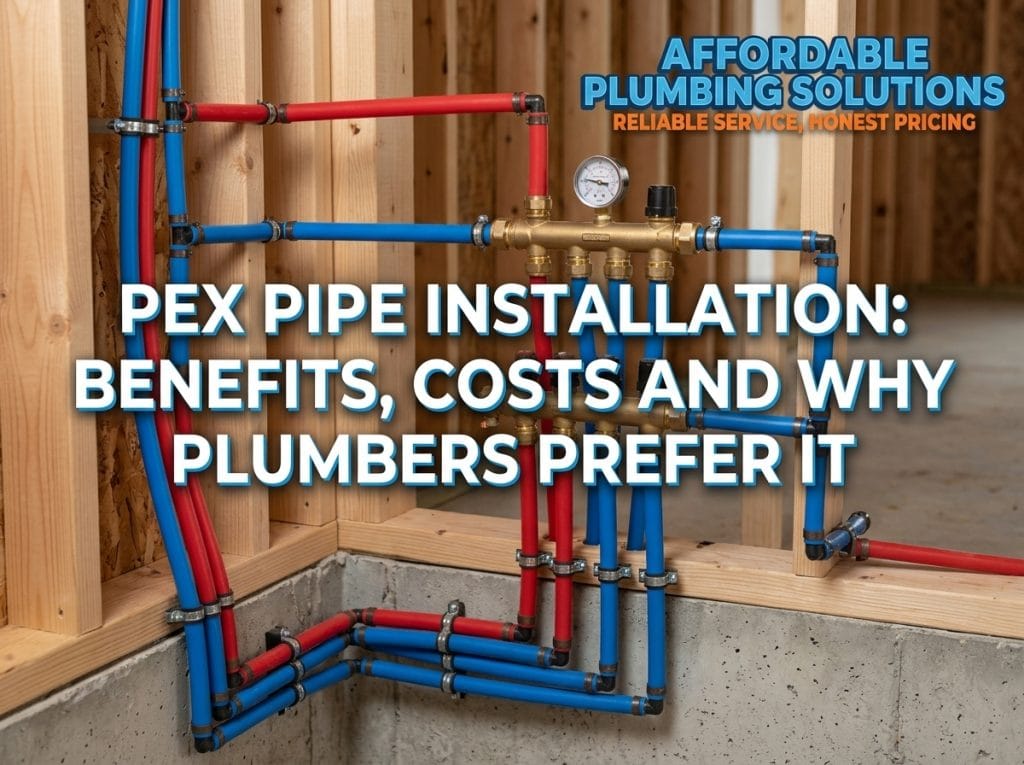
Another major reason homeowners prefer PEX piping is its reliable long-term performance. It is resistant to corrosion, scaling, and many common issues that affect older plumbing systems. As a result, water flow stays consistent and maintenance needs are reduced over time. In this guide, you’ll learn what PEX pipe is, how it is installed, and why it has become a trusted solution for residential plumbing systems.
What Is PEX Piping?
PEX piping (cross-linked polyethylene piping) is a modern, flexible plumbing material used for water supply lines in residential and commercial systems. Unlike traditional rigid pipes such as copper or PVC, PEX is made from a specially treated plastic that is cross-linked to improve strength, temperature resistance, and long-term durability.
It is commonly used for both hot and cold water distribution because it can handle a wide range of temperatures without cracking, corroding, or scaling over time. Its flexibility also allows it to bend around corners easily, reducing the need for multiple fittings and making installation faster and more efficient. One of the main reasons PEX piping has become so popular in modern plumbing systems is its cost-effectiveness and ease of installation.
It is typically installed using a “manifold” or “home-run” system, which helps improve water pressure consistency and simplifies maintenance. PEX is also resistant to freezing damage compared to metal pipes, as it can expand slightly under pressure. Because of these advantages, it is widely used in new home construction and repiping projects, offering a reliable, long-lasting solution for safe and efficient water flow.
Key Benefits of PEX Pipe Installation
PEX has become one of the most widely used plumbing materials because it combines strength, flexibility, and long-term reliability. Compared to traditional piping materials, it offers several practical advantages that simplify installation while improving the performance of the entire plumbing system. From lowering installation costs to resisting corrosion and freezing temperatures, PEX provides benefits that homeowners continue to appreciate long after the installation is complete.
Flexibility and Fewer Fittings
One of the biggest advantages of PEX pipe installation is the flexibility of the tubing itself. Unlike copper or galvanized steel, PEX bends easily around corners, through wall cavities, and around structural framing without requiring numerous elbows or joints. This flexibility allows installers to create longer continuous pipe runs while reducing the number of connection points throughout the plumbing system.
Using fewer fittings offers several long-term benefits beyond faster installation. Every plumbing connection represents a potential location for leaks to develop over time, so minimizing fittings improves overall system reliability. Fewer joints also help maintain stronger water pressure, reduce installation costs, and simplify future maintenance if repairs are ever needed. For homeowners, this translates into a plumbing system that is both efficient and dependable.
Freeze Resistance
Cold weather can place significant stress on plumbing systems, especially when water freezes inside the pipes. Traditional metal pipes often crack or burst because frozen water expands with tremendous force. PEX performs better in freezing conditions because the tubing has the ability to expand slightly when ice forms inside, reducing the likelihood of permanent damage.
Although PEX offers better freeze resistance than many conventional piping materials, it should not be considered completely freeze-proof. Pipes installed in unheated crawl spaces, garages, attics, or exterior walls should still be properly insulated to prevent freezing. Combining quality installation with appropriate insulation provides the best protection against winter plumbing problems and costly water damage.
Corrosion and Rust Resistance
Metal plumbing systems can gradually deteriorate due to corrosion, rust, and mineral deposits that build up inside the pipes over many years. As corrosion increases, water flow becomes restricted, pressure drops, and the likelihood of leaks grows. PEX eliminates these concerns because the material does not rust or corrode when exposed to normal household water conditions.
Its smooth inner surface also prevents the accumulation of scale and mineral buildup that commonly affects older metal pipes. This allows water to flow freely while helping plumbing fixtures operate more efficiently. Homeowners benefit from consistent water pressure, cleaner water delivery, and reduced maintenance expenses throughout the lifespan of the plumbing system.
Faster Installation Time
Installing traditional copper piping often requires cutting, soldering, threading, and assembling multiple fittings, making the process both time-consuming and labor-intensive. PEX simplifies installation because the tubing is lightweight, flexible, and much easier to route through existing walls and floors. Professional plumbers can often complete installations significantly faster while using fewer specialized tools.
A quicker installation not only saves labor costs but also reduces disruption inside the home. This is especially valuable during whole-house repiping projects where minimizing downtime is important for homeowners. Faster completion means plumbing systems can be tested, inspected, and returned to service sooner, making PEX an efficient choice for both new construction and remodeling projects.
Quiet Water Flow
Many homes with older metal plumbing systems experience loud noises when water flows through the pipes. Vibrations, pipe movement, and water hammer can create banging or rattling sounds that become especially noticeable when appliances or faucets are turned on and off. These noises can be disruptive, particularly in multi-story homes.
PEX naturally absorbs much of this vibration because of its flexible construction. Instead of transferring sound throughout the plumbing network, the tubing helps reduce water flow noise and minimizes pipe movement. When installed correctly with proper supports, PEX creates a quieter plumbing system that improves overall comfort while maintaining efficient water delivery throughout the home.
PEX Pipe Installation Cost Breakdown
The cost of PEX pipe installation depends on several factors, including the size of the home, the length of piping required, labor rates, and the complexity of the plumbing system. In general, PEX is considered one of the most affordable plumbing materials available because it costs less than copper and requires less time to install.
While the initial investment varies from one project to another, many homeowners choose PEX because it provides long-term savings through lower labor costs, reduced maintenance, and excellent durability. Understanding the different cost components can help you estimate your budget before starting a plumbing project.
Average Cost Per Linear Foot
The material cost for PEX pipe typically ranges from $0.50 to $2.00 per linear foot, depending on the pipe diameter, manufacturer, and PEX type (PEX-A, PEX-B, or PEX-C). Smaller-diameter tubing used for standard water supply lines usually costs less than larger pipes designed for high-volume applications. Even with premium-grade PEX, the material remains significantly more affordable than copper piping.
Besides the tubing itself, homeowners should also consider the cost of fittings, manifolds, connectors, shut-off valves, and insulation. These additional components increase the overall project cost but are essential for creating a safe and efficient plumbing system. Despite these extra materials, PEX installations generally remain budget-friendly compared to traditional plumbing options.
Labor Costs
Professional installation costs vary based on the home's layout, accessibility of existing plumbing, and regional labor rates. On average, plumbers charge between $45 and $150 per hour, although rates may be higher for large or complex projects. Because PEX is flexible and easier to install than rigid metal pipes, labor costs are often lower than those associated with copper installations.
Hiring a licensed plumber ensures the plumbing system is installed according to local building codes and manufacturer guidelines. Professional installation also reduces the risk of leaks, improper connections, and costly repairs in the future. While DIY installation may seem appealing for small projects, larger plumbing jobs are best handled by experienced professionals.
Whole-House Repipe Cost Estimate
Replacing all of the plumbing in a home with PEX is known as a whole-house repipe. For most residential properties, the total cost typically ranges from $4,000 to $15,000, depending on the home's size, number of bathrooms, accessibility of the pipes, and local labor rates. Smaller homes generally fall at the lower end of the price range, while large multi-story homes require more materials and labor.
Although a whole-house repipe represents a significant investment, it can eliminate recurring plumbing issues caused by aging pipes, corrosion, or frequent leaks. Many homeowners find that replacing outdated plumbing with PEX improves water pressure, increases system reliability, and reduces future repair expenses, making it a worthwhile long-term upgrade.
Factors That Affect Total Cost
Several variables influence the final price of a PEX installation project. The overall cost depends on much more than the price of the tubing itself, making it important to evaluate the entire scope of work before requesting estimates.
Common factors that affect total installation cost include:
- Size of the home
- Number of plumbing fixtures
- Length of pipe required
- Pipe diameter and PEX type
- Accessibility of existing plumbing
- Local labor rates
- Permit and inspection fees
- Additional materials such as fittings and manifolds
Projects involving older homes or difficult-to-access plumbing may require extra labor, increasing the final cost. Obtaining multiple estimates from qualified plumbers can help homeowners compare pricing and choose the best value for their project.
PEX vs. Copper vs. PVC: Cost Comparison
When comparing plumbing materials, PEX offers the best balance of affordability, durability, and installation efficiency. Copper is known for its strength and long lifespan but comes with significantly higher material and labor costs. PVC is the least expensive option; however, it is primarily used for drain, waste, and vent systems rather than indoor hot and cold water supply. For most residential plumbing projects, PEX provides the best overall value by combining lower installation costs with reliable long-term performance.
Feature
PEX
Copper
PVC
Average Material Cost
Low ($0.50–$2.00 per linear foot)
High ($2–$8+ per linear foot)
Very Low ($0.50–$2.00 per linear foot)
Installation Cost
Low
High
Low
Labor Time
Fast
Slow
Fast
Flexibility
Excellent
Poor
Poor
Corrosion Resistance
Excellent
Good (may corrode over time)
Excellent
Freeze Resistance
Very Good
Poor
Fair
Hot Water Compatible
Yes
Yes
No (standard PVC)
Expected Lifespan
40–50+ years
50–70+ years
25–40 years
Potential Drawbacks of PEX Piping
Although PEX offers many advantages, no plumbing material is perfect for every application. Understanding its limitations helps homeowners decide whether it is the right choice for their property. While these drawbacks are relatively minor compared to its benefits, they should still be considered before beginning a plumbing installation or repiping project.
UV Sensitivity
One of the biggest limitations of PEX piping is its sensitivity to ultraviolet (UV) light. Prolonged exposure to direct sunlight can weaken the material, reducing its strength and shortening its lifespan. For this reason, PEX should never be stored outdoors for extended periods before installation.
After installation, PEX should remain inside walls, ceilings, crawl spaces, or other protected locations where it is shielded from sunlight. If sections of piping must pass through areas with natural light, proper protective coverings should be used to prevent UV damage and preserve long-term performance.
Rodent Damage Risk
Like many plastic building materials, PEX can occasionally be damaged by rodents. Mice and rats may chew through the tubing if they gain access to crawl spaces, attics, or wall cavities where plumbing is installed. Although this issue is not unique to PEX, it remains an important consideration in areas with existing pest problems.
Preventing rodent infestations is the most effective way to protect plumbing systems. Regular home inspections, sealing entry points, and maintaining proper pest control can significantly reduce the risk of damage. In most homes with effective rodent prevention, PEX performs reliably for decades without problems.
Is PEX Pipe Installation Worth It?
For most homeowners, PEX pipe installation is worth the investment because it offers an excellent combination of affordability, durability, and long-term performance. Compared to traditional plumbing materials, PEX is easier to install, requires less maintenance, and resists common problems such as corrosion, rust, and mineral buildup. Whether you're building a new home or replacing aging pipes, PEX provides a reliable plumbing solution that delivers lasting value while helping reduce future repair costs.
- Lower installation costs than copper due to reduced labor and material expenses.
- Flexible tubing allows faster installation with fewer fittings and leak points.
- Corrosion and rust resistant, helping maintain clean water flow over time.
- Excellent freeze resistance, reducing the risk of burst pipes in cold weather.
- Long service life, often lasting 40–50 years or more with proper installation.
- Minimal maintenance requirements, saving money on future plumbing repairs.
- Quiet water flow, reducing noise and vibration compared to rigid metal pipes.
- Suitable for most residential plumbing systems, including new construction and whole-house repiping.
Conclusion
PEX pipe installation has become one of the most practical and widely used plumbing solutions in modern residential construction. Its flexibility, corrosion resistance, and cost efficiency make it a strong alternative to traditional materials like copper and galvanized steel. For homeowners looking for a reliable plumbing system that balances performance with affordability, PEX offers a long-lasting solution that reduces maintenance concerns and improves overall water flow efficiency.
While no plumbing material is completely perfect for every situation, PEX stands out for its ease of installation and long-term value. When installed correctly by a qualified professional, it can provide decades of dependable service with minimal issues. For most homes, especially new builds and repiping projects, PEX remains a smart and future-ready investment.
Frequently Asked Questions
How long does PEX pipe last?
PEX piping typically lasts 40 to 50 years or more when properly installed and used under normal conditions. Its lifespan depends on water quality, installation quality, and exposure to environmental factors.
Is PEX pipe safe for drinking water?
Yes, PEX is generally considered safe for drinking water systems when it meets approved plumbing standards. It does not corrode or leach harmful metals like some older piping materials.
Can I install PEX pipe myself?
DIY installation is possible for small projects, but professional installation is recommended for full plumbing systems. Proper tools, fittings, and code compliance are essential for leak-free performance.
How much does it cost to repipe a house with PEX?
A whole-house repipe with PEX usually costs between $4,000 and $15,000, depending on home size, accessibility, and labor rates. Larger or complex homes may cost more.
How much does it cost to install PEX?
PEX installation typically costs $0.50 to $2.00 per linear foot for materials, plus labor charges. Total cost varies based on system size and installation complexity.
Is PEX plumbing cheaper than PVC?
PEX is generally more expensive than PVC materials, but PVC is mainly used for drain systems. For water supply lines, PEX is more practical and cost-effective in the long run.
REQUEST A SERVICE

Testimonials
Our Customer Feedback









Our customer feedback
Make Us Your First-Choice Plumbing Company
Are you tired of dealing with unreliable plumbers? Do you need a local plumbing company you can trust for all your plumbing needs? Your search ends with us. We are the plumbers to trust if you need prompt, affordable and reliable plumbing service in Carmichael. When you invite us into your home, you’re not just getting a temporary fix; you’re ensuring a lasting solution from a team that treats your plumbing needs with the utmost seriousness. Our prompt response to emergencies and our fervent dedication to solving your plumbing woes set us apart.
Get in touch
Thank you! Your submission has been received!
Oops! Something went wrong while submitting the form.
Where we serve
Our Service Areas
We proudly provide professional plumbing services across surrounding communities, delivering reliable repairs, installations, and maintenance wherever dependable plumbing support is needed.
- Sacramento
- Roseville
- Carmichael
- El Dorado Hills
- Orangevale
- Rocklin
- Granite Bay
- Citrus Heights
- Antelope
- Arden-Arcade
- Fair Oaks
- Folsom
- Lincoln
- Loomis
- Rancho Cordova
- Rio Linda
- North Highlands
- Elk Grove