
Affordable Plumbing was great to deal with! Had a problem with a very niche gas line in my home. Derek came right out to look at it and determined it would take a specialty fireplace company to replace. Really appreciated his honesty, integrity and communication. I’ll absolutely use them for my next plumbing needs.

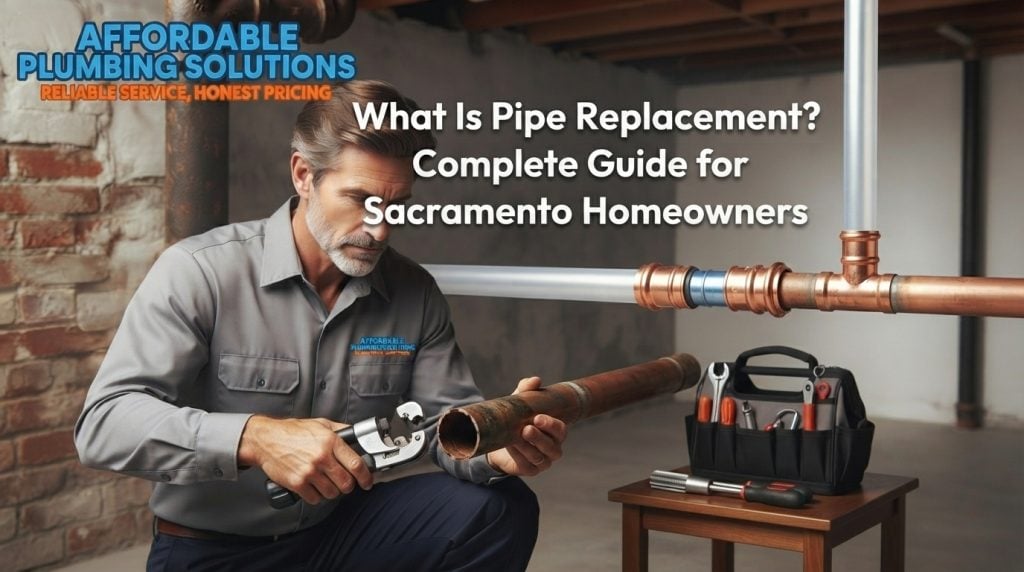
What Is Pipe Replacement? Complete Guide for Sacramento Homeowners
Your plumbing system works silently behind the walls every single day — delivering clean water, removing waste, and keeping your home functional. But pipes do not last forever. Over time, they corrode, crack, clog, and wear down. When that happens, repairs can only go so far. At some point, pipe replacement becomes the smarter, more cost-effective choice. Knowing when you have crossed that line can save you from months of recurring problems and thousands in water damage repairs.
Most homeowners put off plumbing issues because they start small — a slow drain here, a minor drip there. The trouble is, small problems rarely stay small. What looks like a simple fix today can turn into burst pipes, mold growth, or structural water damage tomorrow. Understanding what pipe replacement actually involves, how it differs from a basic repair, and what warning signs to watch for puts you in control. You stop reacting to plumbing emergencies and start making informed decisions before the damage spreads.
Pipe Replacement — Definition & Overview
Pipe replacement is the process of removing damaged, deteriorated, outdated, or worn-out pipes and installing new ones to restore the functionality and safety of a plumbing system. The project may involve replacing a single pipe section, multiple lines, or an entire plumbing network, depending on the severity of the problem.
Modern replacement materials such as PEX, copper, and PVC are designed to provide improved durability, better water flow, and longer service life. While pipe replacement requires a greater investment than minor repairs, it often delivers long-term benefits by preventing recurring plumbing failures and reducing future maintenance costs.
Pipe Replacement vs. Pipe Repair: What's the Difference?
Pipe repair and pipe replacement both solve plumbing problems, but they are used in different situations. Repairs address specific issues such as small leaks or minor damage, while replacement involves installing new pipes when the existing system is aging, severely damaged, or experiencing recurring problems. Choosing the right option depends on the condition of the pipes and the extent of the damage.
Comparison Factor
Pipe Repair
Pipe Replacement
Primary Goal
Fix a specific problem.
Replace failing or outdated pipes.
Suitable For
Minor leaks, cracks, and isolated damage.
Extensive damage, corrosion, or aging pipes.
Cost
Lower upfront cost.
Higher initial investment.
Project Size
Small and localized work.
Larger-scale plumbing upgrade.
Completion Time
Usually faster.
May take longer depending on scope.
Longevity
Short- to medium-term solution.
Long-term solution.
Future Repairs
May require additional repairs later.
Reduces the likelihood of recurring issues.
Common Signs You Need Pipe Replacement
Plumbing pipes often show warning signs before they fail. Recognizing these symptoms early can help homeowners prevent costly water damage, improve system performance, and avoid emergency plumbing repairs. If you notice several of the following issues occurring at the same time, it may be time to consider pipe replacement.
- Frequent or Recurring Leaks – Multiple leaks appearing throughout the plumbing system often indicate aging or deteriorating pipes.
- Low Water Pressure – Reduced water flow from faucets and fixtures may result from corrosion, mineral buildup, or damaged pipes.
- Discolored or Rusty Water – Brown, yellow, or reddish water can signal internal pipe corrosion that affects water quality.
- Strange Plumbing Noises – Banging, rattling, whistling, or water hammer sounds may indicate underlying pipe problems.
- Visible Corrosion or Rust – Flaking metal, discoloration, rust spots, or bulging sections are common signs of pipe deterioration.
- Unusually High Water Bills – Hidden leaks can waste significant amounts of water and cause utility costs to increase unexpectedly.
- Recurring Clogs or Slow Drains – Persistent drainage issues may suggest pipe damage, buildup, or structural deterioration.
- Water Stains or Moisture Damage – Damp walls, ceilings, floors, or unexplained mold growth can indicate leaking pipes behind surfaces.
What Causes Pipes to Need Replacement?
Pipes can fail for many reasons, ranging from natural aging to environmental factors and installation problems. While some plumbing issues can be repaired, certain conditions gradually weaken the entire system and make replacement the more practical solution. Understanding the common causes of pipe deterioration helps homeowners identify potential risks and take action before serious plumbing failures occur.
Age & Material Lifespan
Every plumbing material has a limited lifespan, and pipes naturally deteriorate as they age. Over time, constant water flow, pressure fluctuations, and environmental conditions can weaken pipe walls, increasing the risk of leaks, corrosion, and other plumbing issues.
Knowing the typical lifespan of different pipe materials can help homeowners determine when replacement may be necessary.
- Copper Pipes: Typically last 50–70+ years when properly maintained.
- PEX Pipes: Often provide a lifespan of 40–50 years under normal conditions.
- PVC Pipes: Can last 50–100 years, depending on usage and environmental factors.
- CPVC Pipes: Generally remain functional for 50–75 years.
- Cast Iron Pipes: Usually last 50–100 years, though corrosion may shorten their lifespan.
- Galvanized Steel Pipes: Commonly last 40–60 years before rust and corrosion become significant concerns.
Corrosion & Water Chemistry
Corrosion is one of the most common reasons pipes require replacement. Minerals, oxygen, and chemicals naturally present in water can gradually react with pipe materials, causing the interior and exterior surfaces to deteriorate. This process weakens the pipe walls and increases the risk of leaks.
Water chemistry plays a significant role in how quickly corrosion develops. Highly acidic water, excessive mineral content, or certain environmental conditions can accelerate pipe damage. As corrosion progresses, water quality may decline, pressure may decrease, and pipe replacement often becomes necessary to restore system reliability.
Tree Root Intrusion
Tree roots naturally seek moisture and can infiltrate small cracks or joints in underground pipes. Once roots enter the plumbing system, they continue growing and can create significant blockages that restrict wastewater flow and damage the pipe structure.
Over time, expanding roots may crack, crush, or separate sections of underground piping. While minor root intrusion can sometimes be cleared, extensive root damage often requires partial or complete pipe replacement to restore proper drainage and prevent recurring problems.
Outdated/Hazardous Materials
Many older homes contain plumbing materials that no longer meet modern standards. Certain outdated materials can become unreliable with age or pose potential health and safety concerns for occupants.
For example, aging galvanized steel pipes often experience significant corrosion, while other obsolete materials may deteriorate more quickly than modern alternatives. Replacing outdated plumbing materials improves system performance, enhances reliability, and helps bring the property closer to current plumbing standards.
Types of Pipe Materials Used in Replacement
Modern pipe replacement projects use a variety of materials depending on the property's needs, budget, water conditions, and local building requirements. Each material offers unique advantages, making it important to understand the characteristics of the most commonly used replacement options.
Copper
Copper has been a trusted plumbing material for decades due to its durability and long service life. It resists UV exposure, handles high temperatures well, and provides reliable performance in both residential and commercial plumbing systems.
Many homeowners choose copper because of its proven track record and resistance to bacterial growth. Although it is generally more expensive than some alternatives, its longevity and durability often make it a worthwhile investment for long-term plumbing reliability.
PEX (Cross-Linked Polyethylene)
PEX piping has become increasingly popular because it is flexible, lightweight, and relatively easy to install. Its flexibility allows plumbers to route pipes around obstacles with fewer fittings, reducing installation time and labor costs.
PEX also resists scale buildup and corrosion, making it suitable for a variety of water conditions. In many repiping projects, homeowners select PEX because it offers a balance of affordability, durability, and efficient installation.
PVC & CPVC
PVC and CPVC pipes are commonly used in modern plumbing systems, particularly for drain lines and certain water supply applications. These materials are resistant to corrosion and do not rust like metal pipes.
CPVC is specifically designed to handle hot and cold water, while PVC is more commonly used for drainage and vent systems. Both materials are generally affordable, lightweight, and capable of providing many years of reliable service when properly installed.
Cast Iron / Galvanized Steel
Cast iron and galvanized steel were widely used in older construction but are less common in modern installations. While these materials were durable for their time, they are often replaced because of age-related deterioration and corrosion concerns.
Many pipe replacement projects involve removing aging cast iron or galvanized steel systems and upgrading to newer materials. Modern alternatives typically offer better corrosion resistance, improved water flow, and lower maintenance requirements.
The Pipe Replacement Process: Step-by-Step
Pipe replacement involves more than simply removing old pipes and installing new ones. A structured process helps ensure the work is completed safely, efficiently, and according to plumbing standards. Understanding each stage gives homeowners a clearer picture of what to expect during the project.
Step 1 – Inspection & Diagnosis (Camera Inspection)
The process typically begins with a thorough inspection of the plumbing system. Plumbers use specialized tools, including video camera inspections, to identify leaks, blockages, corrosion, root intrusion, and other forms of damage.
Accurate diagnosis helps determine the location and severity of the problem. By assessing the condition of the pipes, plumbers can develop the most effective replacement strategy while minimizing unnecessary disruption to the property.
Step 2 – Choosing Repair Method (Full Replacement vs. Trenchless)
After the inspection is complete, the plumber evaluates the available replacement options. Depending on the condition of the pipes, either traditional replacement or trenchless technology may be recommended.
Traditional replacement involves accessing and replacing damaged sections directly, while trenchless methods can sometimes reduce excavation requirements. The chosen approach depends on factors such as pipe condition, accessibility, budget, and project goals.
Step 3 – Water Shutoff & Access Points
Before replacement work begins, the water supply must be safely shut off to prevent leaks and flooding during the project. This ensures technicians can work on the plumbing system without interruption.
Access points are then created to reach the affected pipes. Depending on the location of the plumbing, this may involve opening walls, accessing crawl spaces, removing sections of flooring, or excavating areas around underground pipes.
Step 4 – Removing Old Pipes
Once access is established, the damaged or outdated pipes are carefully removed. Plumbers take precautions to avoid damaging surrounding structures while disconnecting and extracting the old piping system.
The removal process also provides an opportunity to identify any additional hidden issues. Addressing these concerns before installation helps ensure the new system performs efficiently and reliably.
Step 5 – Installing New Pipes
After the old pipes are removed, new piping materials are installed according to current plumbing standards. Plumbers carefully connect fittings, secure pipe supports, and ensure proper alignment throughout the system.
The installation phase is critical because the quality of workmanship directly affects the longevity and performance of the new plumbing network. Proper installation helps reduce future maintenance needs and improves overall system reliability.
Step 6 – Testing for Leaks & Pressure
Before the project is considered complete, the newly installed pipes undergo testing to verify proper operation. Pressure testing helps identify any leaks, weak connections, or installation issues that require correction.
Water flow and system performance are also evaluated to ensure everything functions as intended. Thorough testing provides confidence that the replacement work meets quality and safety standards.
How Much Does Pipe Replacement Cost?
The cost of pipe replacement varies significantly depending on the size and complexity of the project. Factors such as pipe material, accessibility, labor requirements, and the amount of piping being replaced all influence the final price. Understanding these variables helps homeowners develop realistic expectations when planning a replacement project.
Cost Factors (Material, Length, Accessibility, Labor)
Material selection is one of the biggest factors affecting replacement costs. Copper generally costs more than PEX or PVC, while specialty installations may require additional fittings and equipment.
Project complexity also influences pricing. Longer pipe runs, difficult access locations, wall repairs, excavation work, and local labor rates can all increase the total project cost. A professional inspection is usually required to provide an accurate estimate.
Average Cost Range by Material
Different pipe materials come with different installation costs. PEX is often among the most affordable options, while copper typically carries higher material and labor expenses due to installation requirements.
The total project cost ultimately depends on the property's size, the amount of piping being replaced, and regional market conditions. Comparing multiple estimates can help homeowners understand local pricing and select the most appropriate solution for their budget.
Conclusion
Pipe replacement is an important investment that helps maintain the safety, efficiency, and reliability of a property's plumbing system. While minor issues can often be resolved through repairs, aging pipes, recurring leaks, corrosion, and declining water quality may indicate that replacement is the more practical long-term solution. Understanding the warning signs and causes of pipe deterioration allows homeowners to address problems before they result in costly damage.
Modern replacement materials offer improved durability, better water flow, and greater resistance to common plumbing issues. Whether replacing a single section of pipe or upgrading an entire plumbing system, timely replacement can reduce future maintenance expenses, improve performance, and provide greater peace of mind for years to come.
Frequently Asked Questions
How long does pipe replacement take?
The timeline depends on the size and complexity of the project. A small pipe replacement may take a few hours, while a whole-house repiping project can take several days.
How do I know if I need pipe replacement or just a repair?
Repairs are usually sufficient for isolated issues, while replacement is often recommended when leaks, corrosion, or plumbing problems occur repeatedly throughout the system.
What is the lifespan of different pipe materials?
Copper pipes typically last 50–70+ years, PEX around 40–50 years, PVC 50–100 years, and galvanized steel approximately 40–60 years, depending on conditions and maintenance.
Is pipe replacement covered by homeowners' insurance?
Coverage varies by policy. Insurance may cover damage caused by a sudden pipe failure, but it often does not cover pipe replacement resulting from normal wear, aging, or lack of maintenance.
Can I replace pipes myself?
Small plumbing projects may be suitable for experienced DIY homeowners, but most pipe replacement work requires professional expertise to ensure compliance with plumbing codes and proper installation.
How much is it to replace a pipe?
The cost varies based on pipe material, pipe length, accessibility, labor rates, and project complexity. Simple replacements may cost a few hundred dollars, while larger repiping projects can cost several thousand dollars.
REQUEST A SERVICE

Testimonials
Our Customer Feedback









Our customer feedback
Make Us Your First-Choice Plumbing Company
Are you tired of dealing with unreliable plumbers? Do you need a local plumbing company you can trust for all your plumbing needs? Your search ends with us. We are the plumbers to trust if you need prompt, affordable and reliable plumbing service in Carmichael. When you invite us into your home, you’re not just getting a temporary fix; you’re ensuring a lasting solution from a team that treats your plumbing needs with the utmost seriousness. Our prompt response to emergencies and our fervent dedication to solving your plumbing woes set us apart.
Get in touch
Thank you! Your submission has been received!
Oops! Something went wrong while submitting the form.
Where we serve
Our Service Areas
We proudly provide professional plumbing services across surrounding communities, delivering reliable repairs, installations, and maintenance wherever dependable plumbing support is needed.
- Sacramento
- Roseville
- Carmichael
- El Dorado Hills
- Orangevale
- Rocklin
- Granite Bay
- Citrus Heights
- Antelope
- Arden-Arcade
- Fair Oaks
- Folsom
- Lincoln
- Loomis
- Rancho Cordova
- Rio Linda
- North Highlands
- Elk Grove