
Affordable Plumbing was great to deal with! Had a problem with a very niche gas line in my home. Derek came right out to look at it and determined it would take a specialty fireplace company to replace. Really appreciated his honesty, integrity and communication. I’ll absolutely use them for my next plumbing needs.

When Is Pipe Repair vs. When Do You Need Full Replacement?
A plumbing problem never waits for the right moment. One day it's a small drip under the sink — the next, it's water damage spreading behind your walls. When something goes wrong, homeowners face one immediate question: should the pipe be repaired, or does it need to be fully replaced? Getting that answer right can save you thousands of dollars and protect your home's plumbing for years to come.
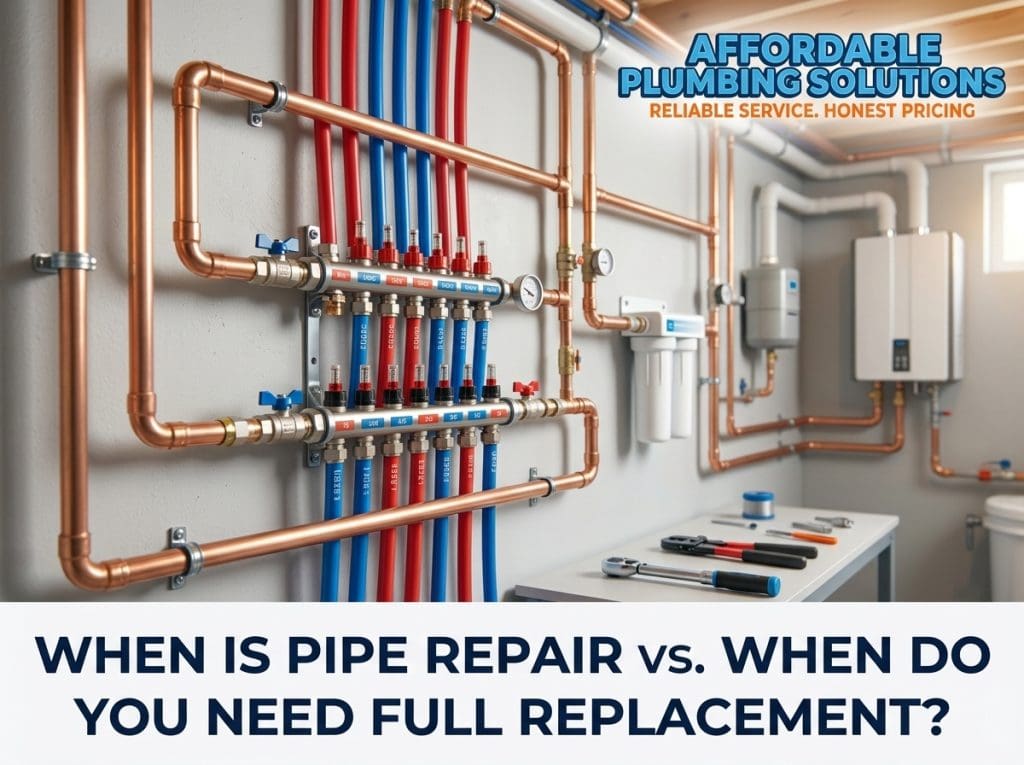
The choice between repair and replacement depends on more than just the size of the leak. Pipe age, material, location, and how often the same section has been fixed before — all of these factors matter. A quick repair might solve today's problem but leave you dealing with the same issue six months later. This guide walks you through the key signs, cost differences, and deciding factors so you can make the smartest call for your home.
Understanding the Difference: Pipe Repair vs. Full Replacement
Before deciding on any plumbing work, it is important to understand what each service involves. While both options aim to restore the functionality of your plumbing system, they address problems at different levels.
- Pipe repair focuses on fixing a specific issue within an otherwise healthy pipe system. Common examples include pipe leak repair, damaged pipe repair, water line repair, and sealing minor pipe cracks. A professional plumber typically repairs the affected section while leaving the rest of the plumbing network intact.
- Pipe replacement, on the other hand, involves removing and installing new piping when existing materials have reached the end of their pipe lifespan or have suffered extensive deterioration. Replacement may affect a single section, multiple lines, or the entire home water supply network, depending on the severity of the problem.
The choice between repair and replacement often depends on factors such as:
- Age of the pipes
- Frequency of plumbing problems
- Presence of corrosion
- Extent of water damage
- Water pressure issues
- Material of existing pipes
- Long-term maintenance costs
A thorough pipe system evaluation performed during a professional pipe inspection can help determine the most cost-effective solution.
Signs You Can Get Away with Pipe Repair
In many cases, you don’t need a full pipe replacement, and a simple pipe repair is enough to fix the issue. When the problem is small, and the plumbing system is still in good condition, repairs can restore performance quickly and cost-effectively.
- Single leak or small crack present: One isolated leak usually means the issue is local, not system-wide. A quick pipe leak repair can solve it without replacing the whole line.
- Stable water pressure in the home: If water pressure is normal, the plumbing system is likely healthy. This often indicates that only a minor repair is needed.
- No visible corrosion in pipes: Pipes without rust or corrosion are usually still strong. In such cases, basic water pipe repair is enough.
- Damage limited to one area: Localized issues can be fixed by repairing only the affected section. The rest of the plumbing system remains untouched.
- No repeated leaks or bursts: If issues are rare, the problem is likely accidental. Emergency pipe repair is usually sufficient.
- Good results from plumbing inspection: A plumbing inspection showing healthy pipes means replacement is not required. Repairs are typically recommended instead.
Warning Signs You Need a Full Pipe Replacement
While repairs are effective in many situations, some plumbing problems indicate deeper issues that cannot be solved with patchwork fixes. Continuing to repair severely deteriorated pipes may lead to repeated failures, higher expenses, and ongoing property damage.
Frequent Pipe Leaks
One leak may be manageable, but repeated leaks throughout the home often signal widespread pipe deterioration.
If plumbers are continually performing leaking pipe repair in different locations, the underlying issue may be aging materials rather than isolated damage. In these cases, replacement becomes the more reliable long-term plumbing solution.
Recurring leaks can also contribute to moisture damage, mold growth prevention challenges, and higher water bills.
Corroded or Rusty Pipes
Corroded pipes and rusty pipes are among the strongest indicators that replacement may be necessary.
Corrosion gradually weakens pipe walls, restricts water flow, and increases the likelihood of sudden failures. Over time, rust particles can affect water quality while reducing overall plumbing performance.
A corroded pipe replacement is often recommended when deterioration is widespread because repairs only address symptoms rather than the root cause.
Multiple Burst Pipes
A single burst pipe may be an isolated incident. However, multiple burst pipes occurring within a short period often indicate a larger system-wide problem.
Repeated failures suggest that the plumbing infrastructure has become weakened due to age, pressure fluctuations, corrosion, or outdated piping materials. Replacing aging sections can improve plumbing reliability and reduce emergency repair costs.
Persistent Water Pressure Problems
Low water pressure can result from hidden leaks, mineral buildup, corrosion, or pipe narrowing. If pressure checks repeatedly reveal poor performance across the home, repairs may not be enough.
When the issue affects multiple areas of the plumbing network, replacement may be necessary to restore consistent water flow and maintain proper plumbing system repair standards.
Outdated Piping Materials
Many older homes contain materials that are no longer considered ideal for modern plumbing systems. Certain pipe materials have shorter lifespans and are more prone to failure.
As pipes age, they become increasingly vulnerable to:
- Corrosion
- Cracking
- Leaks
- Water pressure issues
- Reduced plumbing efficiency
Replacing outdated materials improves the reliability of the home water supply and helps avoid costly future emergencies.
Significant Water Damage
Extensive water damage often points to long-term hidden leaks or major pipe failures. Stained walls, warped flooring, damaged ceilings, and persistent moisture can indicate that the plumbing system has been compromised for an extended period.
In these cases, replacement may provide a more permanent solution while supporting structural integrity and water damage repair efforts.
End of Pipe Lifespan
Every plumbing material has an expected service life. Once pipes reach the end of that lifespan, repairs become less effective and more frequent.
A professional pipe inspection can determine whether aging pipes still have useful years remaining or whether replacement will provide better value. When maintenance costs begin exceeding the benefits of repairs, replacing the system often becomes the most economical choice.
Pipe Material Matters: Which Types Are Repairable vs. Must Be Replaced?
The type of material used in your plumbing system significantly affects whether a pipe repair is sufficient or if a full pipe replacement is necessary. While materials like copper, PVC, CPVC, and PEX can often be repaired when damage is isolated, older or heavily deteriorated pipes may require replacement to maintain plumbing efficiency, prevent water damage, and ensure long-term reliability.
Pipe Material
Can It Be Repaired?
When Repair Is Suitable
When Replacement Is Recommended
Copper Pipes
Yes, in most cases
Small pipe leaks, localized pipe cracks, damaged joints, or isolated water line repair needs
Multiple leaks, widespread corrosion, thinning pipe walls, or aging systems with recurring problems
Galvanized Steel Pipes
Limited repair potential
Minor leaks affecting a small section of pipe
Internal corrosion, rusty pipes, low water pressure, repeated plumbing repairs, or significant pipe deterioration
PVC Pipes
Highly repairable
Cracks, fitting failures, or localized damaged pipe repair
Extensive cracking, brittle pipes, installation defects, or widespread damage throughout the system
CPVC Pipes
Highly repairable
Small leaks, connection issues, or isolated plumbing pipe repair
Aging brittle pipes, repeated failures, or major structural damage
PEX Piping
Yes
Damaged fittings, punctures, isolated leaks, or minor burst pipe repair situations
Poor installation, widespread damage, or multiple failures affecting the home plumbing system
Lead Pipes
Technically repairable but rarely recommended
Temporary emergency pipe repair only
Health concerns, outdated piping materials, water quality issues, and plumbing upgrades focused on safety
Cast Iron Pipes
Sometimes
Localized cracks, minor damaged sections, or limited plumbing system repair
Severe corrosion, structural weakening, recurring blockages, or aging plumbing infrastructure
The Decision Framework: A Step-by-Step Guide for Homeowners
Deciding between pipe repair and pipe replacement is not always straightforward. The right choice depends on factors such as pipe age, material condition, repair history, and the overall health of the plumbing system. Following a structured evaluation process helps homeowners avoid unnecessary expenses while ensuring long-term plumbing reliability.
Rather than focusing only on the immediate problem, homeowners should consider the bigger picture. A careful assessment of existing conditions, combined with professional plumbing diagnostics, can reveal whether repairs will provide lasting value or if replacement is the more practical investment.
Assess the Pipe's Age and Material
The age and material of your water pipes are two of the most important factors when deciding between pipe repair and pipe replacement. Older galvanized steel, cast iron, and lead pipes are more likely to experience corrosion, leaks, and reduced plumbing efficiency than modern materials such as copper, PVC, CPVC, and PEX.
If the plumbing system is relatively new and the damage is isolated, a professional pipe repair service is often the most cost-effective solution. However, aging pipes with visible deterioration may require replacement to maintain plumbing reliability and prevent future water damage.
Count How Many Problem Spots Exist
The number of plumbing issues throughout the home can help determine whether a repair or replacement is the better choice. A single pipe leak repair or localized water line repair typically indicates an isolated problem that can be fixed without major work.
On the other hand, recurring leaks, multiple burst pipes, or repeated plumbing service calls often signal widespread pipe deterioration. When problems appear in several locations, investing in pipe replacement may provide a more dependable long-term plumbing solution.
Get a Plumber's Inspection Report
A professional pipe inspection provides a clear picture of your plumbing system's overall condition. Using leak detection tools, pressure checks, and advanced plumbing diagnostics, plumbers can identify hidden issues that may not be visible to homeowners.
The inspection report helps evaluate pipe corrosion, water pressure issues, and structural integrity. With this information, homeowners can confidently choose between plumbing repairs and replacements while improving water damage prevention and long-term plumbing performance.
Conclusion
Choosing between pipe repair and pipe replacement depends on several factors, including the age of the pipes, the type of material, the extent of the damage, and the overall condition of the plumbing system. While minor leaks, isolated pipe cracks, and localized water line issues can often be resolved through professional pipe repair, widespread corrosion, recurring leaks, and outdated piping materials may indicate that replacement is the more practical solution.
A professional pipe inspection is the most reliable way to evaluate your plumbing infrastructure and determine the best course of action. Addressing problems early helps improve plumbing efficiency, reduce water loss, support water damage prevention, and maintain a safe and dependable home water supply for years to come.
Frequently Asked Questions
How long do pipes last before needing replacement?
Pipe lifespan varies by material. Copper pipes can often last 50 years or more, while PEX, PVC, and CPVC may last several decades when properly maintained. Older galvanized steel and cast iron systems typically require closer monitoring as they age.
Can I repair a pipe myself or do I need a plumber?
Small visible leaks may be temporarily patched, but most plumbing pipe repair projects should be handled by a professional plumber. Proper repairs help prevent future leaks, water damage, and hidden plumbing issues.
Is repiping a whole house worth it?
Whole-house repiping can be a worthwhile investment when a plumbing system experiences recurring leaks, corrosion, low water pressure, or frequent repair costs. It often improves plumbing reliability and reduces long-term maintenance expenses.
What problems require replacing a pipe instead of repairing it?
Pipe replacement is usually recommended for widespread corrosion, multiple pipe leaks, recurring burst pipes, severe pipe deterioration, outdated piping materials, and significant structural damage affecting the plumbing system.
Will homeowners' insurance cover pipe repair?
Many homeowners' insurance policies may cover sudden and accidental pipe damage, such as burst pipes. However, repairs related to aging, corrosion, neglect, or lack of plumbing maintenance are often excluded, so reviewing your policy details is important.
REQUEST A SERVICE

Testimonials
Our Customer Feedback









Our customer feedback
Make Us Your First-Choice Plumbing Company
Are you tired of dealing with unreliable plumbers? Do you need a local plumbing company you can trust for all your plumbing needs? Your search ends with us. We are the plumbers to trust if you need prompt, affordable and reliable plumbing service in Carmichael. When you invite us into your home, you’re not just getting a temporary fix; you’re ensuring a lasting solution from a team that treats your plumbing needs with the utmost seriousness. Our prompt response to emergencies and our fervent dedication to solving your plumbing woes set us apart.
Get in touch
Thank you! Your submission has been received!
Oops! Something went wrong while submitting the form.
Where we serve
Our Service Areas
We proudly provide professional plumbing services across surrounding communities, delivering reliable repairs, installations, and maintenance wherever dependable plumbing support is needed.
- Sacramento
- Roseville
- Carmichael
- El Dorado Hills
- Orangevale
- Rocklin
- Granite Bay
- Citrus Heights
- Antelope
- Arden-Arcade
- Fair Oaks
- Folsom
- Lincoln
- Loomis
- Rancho Cordova
- Rio Linda
- North Highlands
- Elk Grove