



Choosing the right water heater is an important decision because it affects your home’s comfort, monthly energy bills, and daily hot water supply. Many homeowners compare a gas water heater vs electric water heater before buying a new system or replacing an old one. While both options provide reliable hot water, they differ in operating costs, heating speed, energy efficiency, and installation requirements. Understanding these differences makes it easier to choose the best water heater for your household.
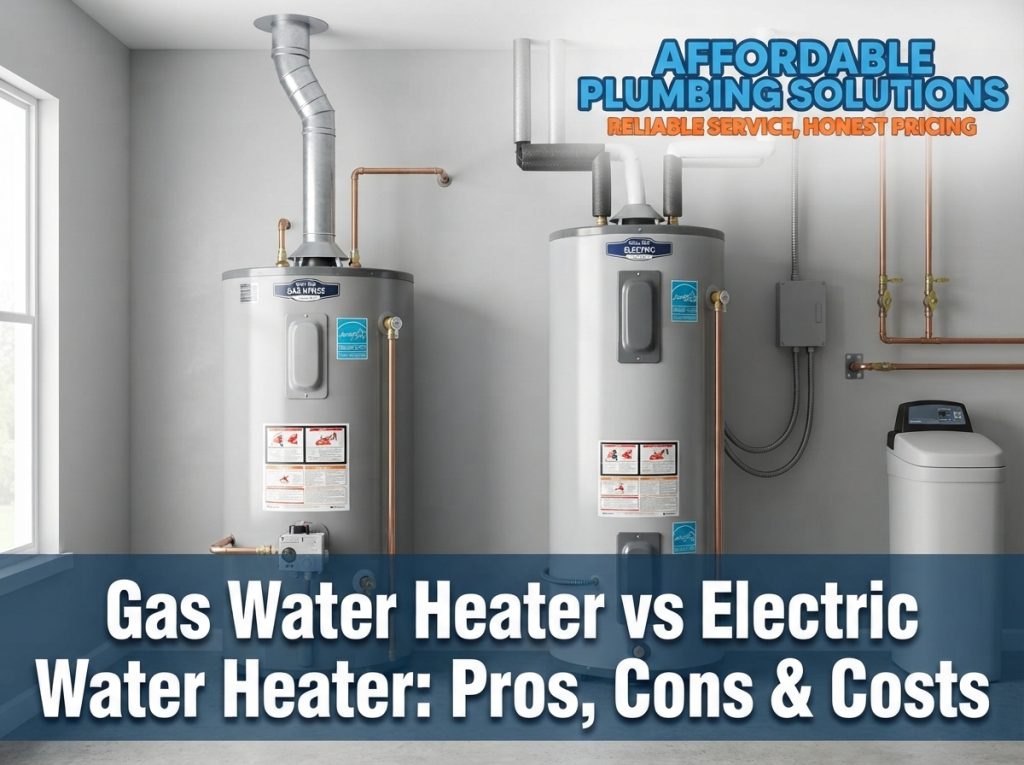
Every home has different hot water needs, so the right choice depends on factors such as family size, local utility prices, budget, and available fuel sources. A detailed gas water heater vs electric water heater comparison helps you evaluate the pros and cons of each system based on performance, maintenance, lifespan, and long-term costs. By learning how both types of water heaters work, you can confidently select a water-heating solution that offers reliable performance, greater energy savings, and lasting value for your home.
The main difference between gas and electric water heaters is the way they generate heat. A natural gas water heater uses a burner system powered by natural gas or propane, while an electric model uses electric resistance heating elements to warm the water.
These differences affect heating speed, recovery time, energy consumption, and overall operating costs. Gas models usually provide faster heating, while electric units often offer simpler installation and higher efficiency ratings.
Gas water heaters produce heat by burning natural gas or propane through a burner system placed below the water heater tank. The heat moves upward and warms the stored water, allowing the unit to provide hot water quickly. This heating method makes gas models suitable for homes with large families and high hot water demand.
Electric water heaters work differently by using heating elements installed inside the tank. These elements heat the surrounding water through electricity without combustion. This design reduces the need for additional components and makes electric models a convenient choice for many residential plumbing systems.
The installation process is an important factor in a gas and electric water heaters comparison. Gas models usually have higher installation costs because they require gas connections, ventilation systems, and safety inspections. Homes without existing gas infrastructure may need additional upgrades before installing a gas unit.
Electric water heater installation cost is generally lower because these systems need fewer components. However, long-term water heater energy costs depend on local electricity rates, household usage, and the efficiency rating of the unit. Homeowners should compare both upfront and ongoing expenses before making a decision.
Gas water heaters are known for their faster recovery time because they can produce high heating capacity quickly. This makes them a strong option for homes where multiple people use hot water throughout the day. Large families often prefer gas systems because they can restore hot water faster after heavy use.
Electric water heaters may have a slower recovery speed, but they provide consistent performance when properly sized. Selecting the right water heater size is important to prevent shortages and improve energy efficiency. A correctly sized unit can meet daily hot water needs without unnecessary energy waste.
Gas water heaters are a common choice for homeowners who need fast heating and strong hot water recovery. These systems use natural gas or propane to heat water through a burner system, making them suitable for homes with high hot water demand. However, they also require proper installation, regular maintenance, and a suitable gas connection.
Electric water heaters use electric resistance heating elements to warm water inside the tank. They are popular because they are simple to install, require less maintenance, and work well in homes without natural gas availability. However, electricity rates and slower recovery time can affect their long-term performance and operating costs.
When comparing gas vs electric water heater models, energy efficiency depends on the system design, fuel source, and household usage. Modern water heaters include Energy Factor (EF) ratings and energy efficiency ratings that show how effectively they convert energy into hot water. Electric models often have higher efficiency because they avoid combustion heat loss, while gas models usually provide faster heating performance.
Feature | Gas Water Heater | Electric Water Heater |
Fuel Source | Natural gas or propane | Electricity |
Heating Method | Burner system | Electric resistance heating elements |
Recovery Time | Faster | Usually slower |
Installation Cost | Higher due to gas line and ventilation needs | Lower and simpler installation |
Energy Efficiency | Good with modern models | Often higher efficiency ratings |
Operating Costs | Lower where gas prices are affordable | Depends on electricity rates |
Maintenance | Requires burner and vent checks | Easier maintenance |
Power Outage Performance | Some models may continue operating | Requires electricity |
Environmental Impact | Higher carbon emissions | Lower impact with renewable energy |
The lifespan of a water heater depends on the unit type, water quality, usage level, and regular maintenance. Traditional gas and electric water heaters usually last around 8–12 years, while properly maintained tankless water heaters can often last longer. Routine care helps improve energy efficiency, prevent unexpected repairs, and extend the overall performance of your water heating system.
Water heater safety is essential for protecting your home, family, and residential plumbing system. Both gas and electric water heaters require proper installation, regular inspections, and correct operation. Following safety guidelines helps prevent problems such as leaks, overheating, electrical issues, or inefficient performance.
Gas water heaters require additional safety measures because they use natural gas or propane for heating. A proper venting system is necessary to remove combustion gases and prevent harmful buildup inside the home.
Important safety steps include checking the gas connection, maintaining the pilot light, inspecting the burner system, and installing carbon monoxide detectors. Professional installation is recommended to ensure the unit meets safety requirements.
Electric water heaters do not use combustion, but they still require proper electrical safety practices. Incorrect wiring, damaged connections, or faulty components can affect performance and create electrical risks. Homeowners should ensure the unit has proper grounding, correct voltage supply, and regular inspections. Maintaining heating elements and checking temperature settings also improves safe operation.
Tankless water heaters are an energy-efficient alternative to traditional tank models because they heat water only when needed. Unlike a standard water heater tank, these systems do not store hot water, which can reduce standby heat loss and improve energy savings. Choosing between gas and electric tankless options depends on your household demand, energy availability, and installation requirements.
Gas tankless water heaters use natural gas or propane to heat water through a powerful burner system. They are known for fast heating performance and strong flow rates, making them suitable for large families and homes with high hot water demand.
These systems usually require professional installation because they need gas connections, proper ventilation, and a suitable venting system. While the upfront cost can be higher, they may provide lower operating costs in areas with affordable natural gas prices.
Electric tankless water heaters use electric heating elements to warm water instantly as it passes through the unit. They are easier to install because they do not require gas lines or combustion ventilation, making them a flexible option for many homes.
These systems work well for smaller households or homes with moderate hot water needs. However, larger electric tankless models may require upgraded electrical capacity to provide enough heating power.
Tankless water heaters provide efficient hot water on demand, but they can experience problems without proper installation and maintenance. Common issues include inconsistent water temperature, reduced flow, mineral buildup, and system error codes. Identifying these problems early helps maintain efficiency and prevents costly repairs.
Choosing between a gas water heater and an electric water heater depends on your home’s energy setup, hot water demand, budget, and long-term goals. Gas models offer faster heating, strong recovery rates, and reliable performance for high-demand households, while electric models provide easier installation, simpler maintenance, and strong energy efficiency. Both options can be effective when properly sized and maintained.
Before replacing an old water heater, consider installation costs, operating expenses, maintenance requirements, and energy efficiency ratings. A well-selected water heating system can improve comfort, reduce unnecessary energy consumption, and provide a dependable hot water supply for years.
A gas water heater can be cheaper to operate in areas where natural gas prices are lower than electricity rates. However, total operating costs depend on fuel prices, energy efficiency, household usage, and maintenance requirements.
Traditional gas and electric water heaters usually last around 8–12 years with proper maintenance. Tankless water heaters can often last 15–20 years when regularly serviced.
Switching from gas to electric is possible in many homes, but it may require electrical upgrades, new wiring, and changes to the installation setup. The cost depends on your existing home energy infrastructure.
Electric water heaters are often considered safer because they do not use combustion or produce gas emissions. However, both systems are safe when professionally installed and properly maintained.
The better option depends on your household needs. Gas water heaters are ideal for faster recovery and high hot water demand, while electric models are suitable for homeowners seeking easier installation and efficient operation.
Electric water heaters often have higher efficiency ratings because they convert energy directly into heat with less energy loss. However, overall efficiency depends on the model, energy source, and household usage patterns.





Great service and very affordable. I had a serious kitchen leak, and their team responded quickly and fixed everything efficiently. The process was smooth, professional, and stress-free. I truly appreciate the fast turnaround and would highly recommend them.